
Seasonal care
March Tempts Everyone to Mow Too Early. The Soil Doesn't Care What the Calendar Says.
March brings the first light mow and the start of the main nesting season. Here is what to do first in a London garden, and what to hold back until birds, frost and soil allow.
By the Aspen Rose team6 min read
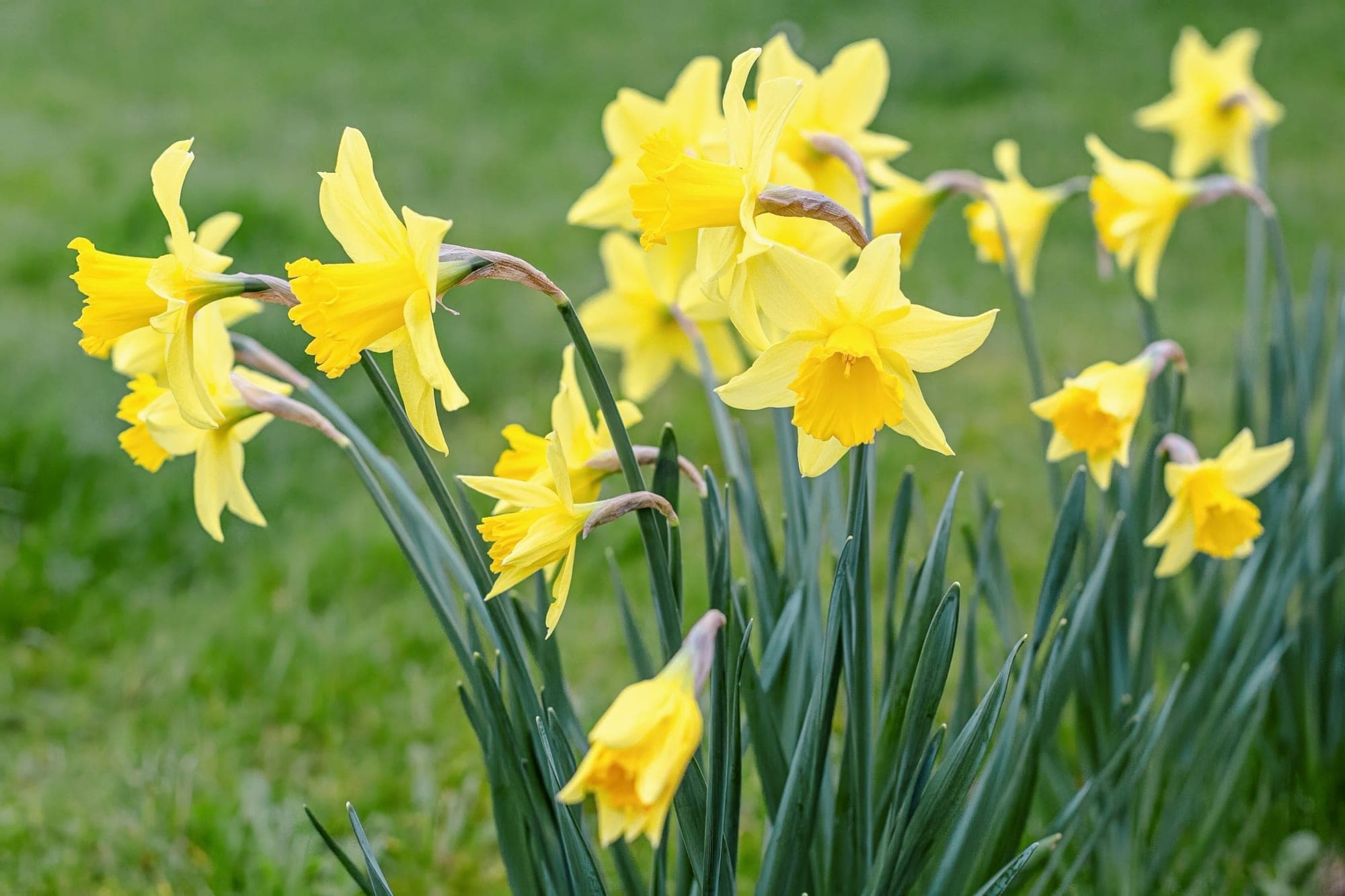
Two clocks start in March, and only one of them cares what the calendar says. The lawn begins to grow when the soil and weather allow it, not on a fixed date, and mowing before it is ready does more harm than waiting a fortnight. Birds begin to build on their own schedule too, which means checking before you use any cutting tool near a hedge.
How cold is March in London?
At Heathrow the Met Office's 1991 to 2020 averages give a March daytime high of 11.7°C and a night-time low of 4.1°C. Air frost falls to 2.9 days, from 6.2 in February. March is also the driest month of the year there, with 38.8 mm of rain over about 8.5 days, against 45.0 mm in February.
Heathrow is in west London, so an Enfield garden will differ a little. The RHS says winter coverings of fleece or straw can come off in mild areas, but should stay on in cold areas until the frost risk has passed.
How do you do the first mow?
The condition of the lawn decides this, not the first of March. Wait for mild, dry weather and a lawn that is clearly growing, then cut lightly. The RHS says to make the first cut with the blades 0.5 cm higher than your usual height, and to keep it light.
The RHS says not to mow crocus and daffodil areas until six weeks after flowering, so the leaves can feed the bulbs.
Feeding is a judgement call. The RHS March page suggests a high-nitrogen spring feed in late March if the grass needs a boost, using as little as possible. The April and June pages say most lawns do not need feeding at all. If the lawn is thin or pale, when to feed your lawn explains the choices. For the cutting height and timing in detail, see when to start mowing in spring.
Can you still cut hedges in March?
Legally, yes. In practice, treat March as the month to stop. The RSPB says the main nesting season runs from March to September, and that birds start building nests in March. The RHS gives March to August as the usual period and says it can run longer. Cutting a hedge is not banned by date in a garden, but the Wildlife and Countryside Act 1981 makes it an offence to intentionally damage a nest while it is in use or being built.
If a cut cannot wait:
- Watch the hedge for a few days. Birds returning to the same spot point to a nest, while birds that only come at night are probably roosting, according to the RSPB.
- Search it thoroughly, including the dense middle.
- Use hand tools if you can. The RSPB says they are easier to control and stop.
- If you find an active nest, stop and leave that section alone.
This applies to dense shrubs and trees as well as hedges, and the RHS's May advice says to take particular care with dense or mature ones. When to trim a hedge sets out the legal position in full.
What goes on in the borders?
March is when borders get their first big tidy, and the order below is not arbitrary: mulching before the soil dries out, and roses before their buds break, are both decisions with a closing window.
- Weed, then mulch. The RHS says to mulch only after weeding, and to wait until the soil is moist and not frozen. Lighter soils can be mulched early in the month and heavier soils later, when they are drier and warmer. Use at least 5 cm of organic matter, and keep it off the stems of woody plants. See how to mulch flower beds for materials and depth.
- Prune roses. The RHS says to prune bush and standard roses as they start growing, before the leaves unfurl. When to prune roses separates the types.
- Prune late shrubs. Summer-flowering deciduous shrubs such as buddleja and Hydrangea paniculata can be cut between January and March. Dogwood and willow grown for winter stems can be cut hard to about 8 cm, which the RHS says deepens the colour.
Hold back on spring-flowering shrubs, which are pruned after they bloom, and on flowering cherries and plums, which the RHS says should not be pruned before mid-summer because of silver leaf.
What should you check before strimming or tidying?
Hedgehog Street says hedgehogs leave hibernation around March and may nest in leaf piles, compost and long grass. Look through those places before cutting, and trim long grass in stages, to about 60 cm (two feet) first, so any sleeping animal is easier to see.
If a pond has frogspawn, leave it where it is. The RHS says moving frogspawn or tadpoles between ponds risks spreading amphibian diseases and invasive pond weeds.
If the borders are more than you want to take on, our mulching of flowerbeds service and garden maintenance cover the work, with a free visit and written quote first.
The months either side
Last month is covered in February, and April is the month to sow or repair a lawn.
Sources
- Met Office: Heathrow location-specific long-term averages, 1991 to 2020
- RHS: March lawns
- RHS: March trees and shrubs
- RHS: March flower garden
- RHS: May trees and shrubs
- RHS: April lawns
- RHS: June lawns
- RHS: Mulch
- RHS: Pruning hedges
- RHS: Amphibians in your garden
- RSPB: Birds' nests and nestboxes
- Hedgehog Street: April top tip
This reflects our own read of what matters most in a London or Hertfordshire garden in March, not a guaranteed task list for yours. How ready your lawn and soil are depends on your own microclimate and the year you are having, so treat the timings above as a guide rather than a date on a calendar. Get in touch if you would rather we judge the moment for you.
March garden questions
Can you reseed bare patches in March?
Late in the month, in mild areas. The RHS says to re-seed bare patches at the end of March where the weather allows, and to delay if it is cold, because seed will not germinate. New turf can be laid on prepared soil that is neither wet nor frozen, and its first mow should wait until the grass is 5 cm tall.
Is March too early to plant out tender plants?
For tender plants, yes. The RHS says winter coverings of fleece or straw can come off in mild areas, but in cold areas should stay on until the frost risk has passed. Hardy perennials such as geraniums and astrantias can go in during early spring.
Should you divide perennials in March?
Yes, if clumps are overgrown, flower poorly or have lost their shape. The RHS says to divide hostas before their leaves emerge, and primroses, polyanthus and hellebores after they flower, watering them well afterwards.
Related services
- Garden MaintenanceRegular garden maintenance across London and Hertfordshire — mowing, pruning, weeding and seasonal care from an experienced team. Get a free quote.
- Mulching of FlowerbedsProfessional flowerbed mulching across London and Hertfordshire — weed suppression, moisture retention and a neat, finished look. Get a free quote.
More from the blog
All articles →
Want a hand with your garden?
Tell us what you have in mind and we'll arrange a free, no-obligation visit and quote.
Free, no-obligation visit · Mon – Fri: 9:00 – 18:30