
Lawns
Feed Your Lawn at the Wrong Point in the Year and You're Feeding the Weeds, Not the Grass
Feed a lawn that needs it in mid-spring and again in early autumn, using the right product each time. The RHS adds a caution: most lawns grow well without any feed at all.
By the Aspen Rose team7 min read
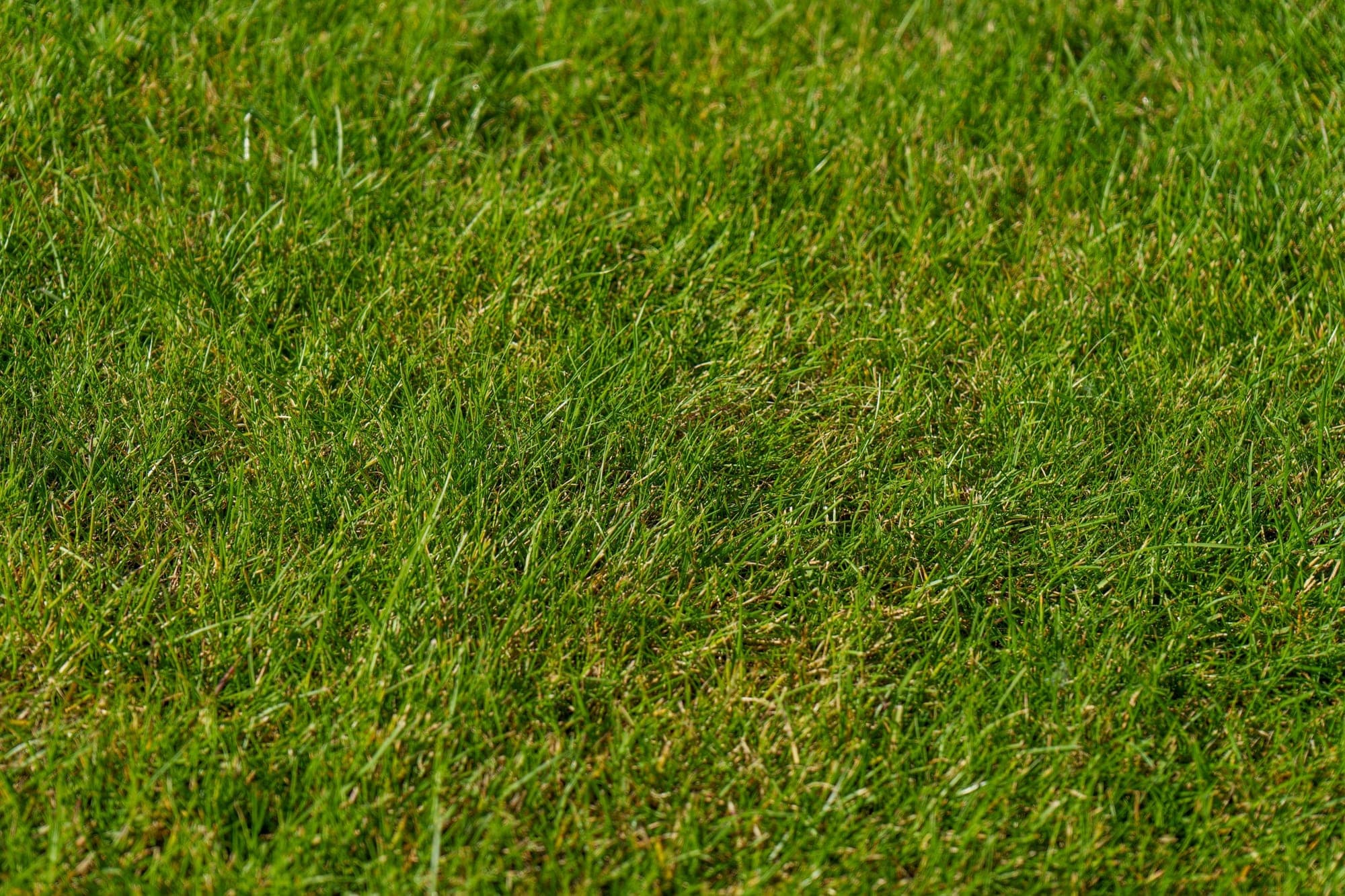
The product matters as much as the timing. A spring feed applied in autumn, or the reverse, pushes the wrong kind of growth at exactly the wrong moment, which is a more common mistake than skipping feeding altogether.
Does your lawn need feeding at all?
Not always, and the RHS is upfront about it: most lawns grow well without feeding, and a relaxed, wildflower-friendly lawn does not need it at all. Artificial fertilisers carry an environmental cost, so the RHS's position is to use the minimum that actually does something.
Others take a different line. The Grass People, a UK seed and fertiliser seller, recommends feeding at least twice a year. Which? says lawns on poor, sandy soil need feeding at least once and preferably twice. Which?'s advice is tied to a soil type, while the retailer's is general, and it sells the products it is recommending.
The RHS's own middle ground is that feeding can give a poor-growing lawn a boost, especially where the goal is a dense, all-grass lawn, but it adds a point worth sitting with: in many parts of the UK, drought is now a bigger factor than lack of feeding. A lawn struggling in a dry August usually does not need fertiliser; it needs water, or just patience.
When should you feed through the year?
| Window | What to use | What the sources say |
|---|---|---|
| Mid-spring, usually late March to April | A spring or summer lawn feed, high in nitrogen | The RHS says to apply it while the grass is actively growing. A slow-release product only needs applying once. |
| Summer, optional | The same type of feed | If the lawn still looks poor after a couple of months, the RHS says you can feed again, but not beyond August. |
| August, thin or poor soil | A high-phosphate feed | The RHS says this strengthens roots for winter instead of leafy top growth. |
| Early autumn, September to mid-October | A feed made for autumn | The RHS says it encourages root growth through winter, and to feed only if the lawn needs a boost. |
| Winter | Nothing | The RHS says very few plants need feeding in winter. |
Two things in that table are worth flagging rather than skimming past. First, the late-season rows are where real damage happens: the RHS warns that growth stimulated late in the year can be hit by winter cold, pests and disease, and says plainly not to fertilise after September, high-nitrogen feeds included. Its own pages are not perfectly consistent on the edge of that window either, with the fertiliser guide putting autumn feeds from September to mid-October, so the safe approach is to feed early in that period with an autumn-labelled product, not a late top-up of whatever is left in the shed. Second, the RHS is specific that leftover summer feed should not go down in autumn, because it carries too much nitrogen for what the lawn needs going into winter.
What do the numbers on the bag mean?
The three figures are the proportions of nitrogen (N), phosphorus (P) and potassium (K), always in that order, and understanding them is worth five minutes before your next purchase. The RHS describes the nutrients like this:
- Nitrogen drives leaf and stem growth, so spring and summer lawn feeds are high in it.
- Phosphorus supports root and shoot development.
- Potassium supports hardiness against cold. The RHS says autumn lawn feeds are rich in potassium and phosphorus, to encourage hardiness and root growth.
For comparison, the RHS gives Growmore, a general garden fertiliser, as 7-3.1-5.8. A spring lawn feed is high in nitrogen, so its first figure is the biggest of the three. The RHS gives no target ratio for an autumn feed, so the practical answer is to buy a product labelled for autumn use rather than trying to reverse-engineer the numbers yourself.
When should you not feed?
- In a dry spell. The RHS advises applying feed in cool, moist conditions with rain expected, or watering it in lightly if none comes. Its drought guidance goes further still: do not put fertiliser or lawn weedkiller on drought-affected turf in autumn at all, and wait until spring when the grass and weeds are both growing strongly.
- On compacted soil. The RHS says feed may not work well on hard ground, so fork the soil loose first rather than adding more product to compensate.
- In winter. Autumn feeds go on from September to mid-October, full stop, and the RHS says very few plants need feeding once winter arrives.
- On a wildflower lawn. The RHS says not to feed areas you are managing for wild plants, since feeding favours the grass you are trying not to encourage.
How do you apply it?
Follow the rate on the packet, which the RHS says is usually about a handful per square metre, and treat that as a ceiling rather than a target: use the lowest amount that works. Spread it evenly, by hand over a small lawn or with a calibrated spreader over a larger one, ideally just before forecast rain. If no rain falls within a day or so, water it in yourself.
In autumn, feeding is the last step in a sequence, not the first thing to reach for. The RHS suggests scarifying and aerating before feeding, and only feeding if the grass is still growing poorly afterwards. Our guide on when to scarify a lawn covers that step, and how to get rid of moss in your lawn explains why a well-fed, dense lawn is harder for moss to colonise in the first place.
If you would like feeding looked after as part of a regular routine, it can be included in our garden maintenance service. The visit to look at your lawn is free, and you can ask for it on the contact page.
Sources
- RHS: Lawn care in spring and summer
- RHS: Lawn care in autumn
- RHS: August lawn jobs
- RHS: October lawn jobs
- RHS: Fertilisers: types and uses
- RHS: How to feed plants
- RHS: Lawn care for drought conditions
- RHS: Lawns in shade
- RHS: Weeds in lawns
- Which?: Best lawn treatments
- Which?: How to get rid of moss in a lawn
- The Grass People: When to feed a lawn
This reflects what tends to work on lawns in London and Hertfordshire's clay and loam soils, not a guarantee for yours. Soil type, shade and how the lawn is used all change the answer, so treat this as a starting point — get in touch if you'd like us to take a proper look at what's actually going on in yours.
Lawn feeding questions
Is weed and feed a good idea?
The RHS is cautious. It says combined weedkiller and fertiliser products reduce lawn biodiversity and are often unnecessary, because most lawns do not need regular feeding. If you use a selective weedkiller, follow the label on what to do with the clippings, since the RHS warns they can harm plants if composted and later used as mulch.
Should a shaded lawn be fed differently?
Yes. The RHS says lawns in shade are best fed in autumn, just before the trees lose their leaves, with a potassium-rich autumn feed. If you feed in spring instead, do it about a month before the trees come into leaf and use a spring or summer feed at half the rate recommended for full sun.
Are organic lawn feeds better?
The RHS suggests organic feeds in its April and October lawn jobs, and says artificial fertilisers take a lot of energy to make and may harm the environment. It also warns that incorrect application and overuse of fertilisers can pollute water, so the dose on the packet still applies.
Related services
More from the blog
All articles →
Want a hand with your garden?
Tell us what you have in mind and we'll arrange a free, no-obligation visit and quote.
Free, no-obligation visit · Mon – Fri: 9:00 – 18:30