
Lawns
Raking Out Moss Is the Easy Part. Keeping It Out Means Fixing What Let It In.
Raking out moss is easy. Keeping it out means fixing what let it in, whether that is shade, compaction, poor drainage, acid soil or mowing too short. Moss killers only buy time.
By the Aspen Rose team6 min read
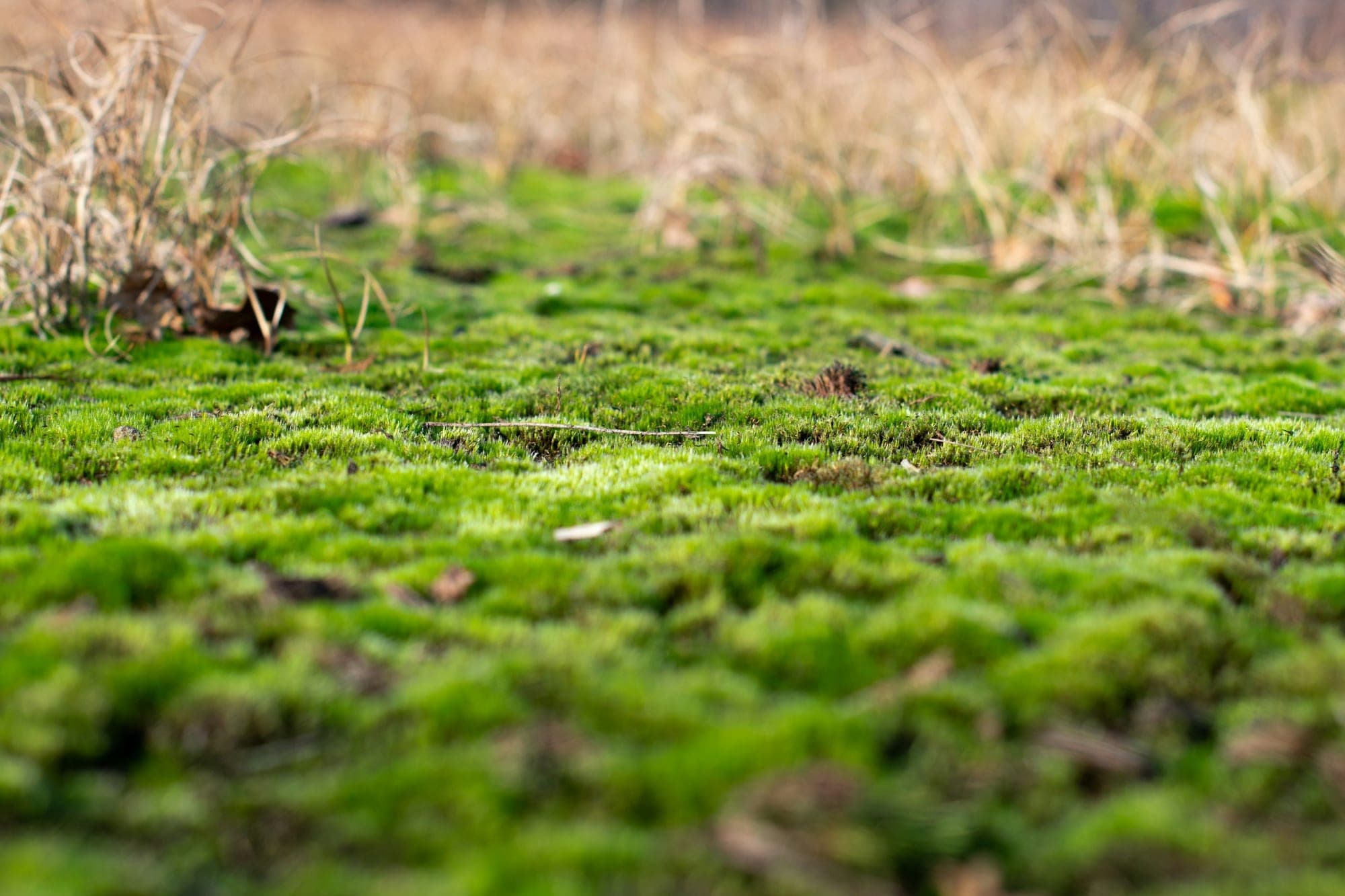
Treat moss as the symptom, not the problem, and the rest of this gets much simpler. It moves into a lawn where the grass is already losing, so the grass is where the lasting fix has to happen, not the moss itself.
Why does moss grow in a lawn?
Moss doesn't attack a healthy lawn. The RHS says it readily appears when conditions favour it over the lawn grasses, and that list of conditions is really a list of things already going wrong: sparse or weak grass (from drought, shade or mowing too low), worn bare areas, compacted soil or poor preparation before the lawn was laid, a damp climate or waterlogging, and acidic soil.
Which? gives a similar list: low fertility, acid soil, compaction, poor drainage and aeration, shade and thin grass. It adds that close mowing, and long, coarse grass, both weaken a lawn and encourage moss.
Work out which of these applies to your lawn before you buy anything, because each has a different fix.
Does moss need removing at all?
Sometimes not. The RHS says a moderate amount of moss in a shaded lawn is usually acceptable and adds greenness, and it only becomes a problem when it stops grass growing. Which? points out that moss looks green in winter but dies back in summer, and does not stand up to wear.
Dead moss also builds up as thatch, which blocks air and water from the grass roots. If grass is being pushed out, or the lawn gets heavy use, it is worth acting.
How do you remove moss?
The simplest method is raking. The RHS says that for moss in a damp, poorly drained lawn you should try a spring-tined rake first, and the moss can go on the compost heap.
For a heavier infestation, scarify. The RHS recommends October or early November, when the grass is growing strongly, with a spring-tined rake for a small lawn or a mechanical scarifier for a larger one. Our guide on when to scarify a lawn covers the method and aftercare.
Raking leaves bare patches. After removing moss, Which? suggests feeding the lawn, top dressing lightly if needed and sowing seed in sparse areas in spring or early autumn.
Do moss killers work?
They work on the moss you can see, not on the reason it grew. The RHS says there is no need for a synthetic mosskiller, because non-chemical methods remove moss effectively. If you still choose a product, there are two main types:
- Iron sulphate mosskillers. These kill the moss, which turns black, and the dead moss then has to be raked out. Which? says they are suited to large areas, are often sold as lawn sand with fertiliser added, and are best applied in spring when moss growth resumes or in autumn before severe frosts. The RHS says not to use iron sulphate on its own as a lawn treatment, only in a proprietary mosskiller approved by the HSE.
- Bacteria-based removers. The bacteria digest the moss, so there is no raking. The RHS says they usually make a noticeable difference but do not remove moss entirely.
The RHS also says not to use baking soda, vinegar, bleach or soap on a lawn, because they can kill the grass.
Whichever you choose, treat it as a pause button, not a fix. The RHS is clear that chemical control is temporary unless the growing conditions change, and a lawn that gets moss killer every spring with nothing else addressed will keep needing it every spring.
How do you stop moss coming back?
Match the fix to the cause.
| Cause | What the RHS or Which? suggests |
|---|---|
| Shade | Prune or thin overhanging trees and shrubs, and use a shade-tolerant grass mix. In deep shade, consider groundcover instead of grass. |
| Compaction | Aerate with a fork or hollow-tine aerator and brush in a top dressing. The RHS says most lawns need this every two to three years, and clay or waterlogged ones every three to four. |
| Poor drainage | Spike and top dress first. Installing drainage is a major job, and the RHS notes that finding somewhere for the surplus water to go can be difficult. |
| Low fertility | Feed a weak lawn in spring or summer and in autumn, though the RHS says most lawns grow well without feeding. See when to feed your lawn. |
| Mowing too short | Raise the blades. See how short to cut your lawn. |
| Very acid soil | Which? says to test the pH first, then lime very acidic soils in winter at 60g per square metre. |
On shade, the RHS says most turf grasses need four to six hours of full sun a day, and that crown lifting or crown thinning can let more light in. It advises consulting a tree surgeon on the method, and our tree surgery service covers that kind of work. If the shade is permanent, the RHS suggests replacing the lawn with groundcover, or accepting the moss.
Is it moss or something else?
Pearlwort looks like moss but is darker green and less feathery, and carries tiny white flowers from May to September, according to Which?. It is treated with a lawn weedkiller instead of a moss killer, so check before you treat.
Regular lawn care is part of our garden maintenance service, and the free visit is a chance to have someone look at what is behind yours.
Sources
- RHS: Moss in lawns
- RHS: Lawns in shade
- RHS: Lawn care in autumn
- RHS: April lawn jobs
- Which?: How to get rid of moss in a lawn
This reflects what tends to work on lawns in London and Hertfordshire's climate and soils, not a guarantee for yours. Every lawn is different, so treat this as a starting point. Get in touch if you'd like us to take a proper look at what's actually going on in yours.
Lawn moss questions
Why does moss come back after I have treated it?
Because the conditions that suited it are still there. The RHS says moss spreads slowly and can re-establish after the lawn is disturbed, and that airborne spores can travel many miles and germinate in damp conditions. Treating the cause is the only reliable way to slow it down.
Does lime get rid of moss?
Only where the soil is very acidic. Which? advises testing the pH first and applying lime in winter at 60g per square metre on very acid soils, and it notes that fine grasses do best at around pH 5.5, so liming a bowling-green style lawn needs care.
Can I put the raked-out moss on the compost heap?
Yes. Both the RHS and Which? say raked-out moss can go on the compost heap. If the lawn has been treated with a selective weedkiller, the RHS says to follow the label on what to do with clippings, because they can affect plants if composted and later used as mulch.
Related services
- Garden MaintenanceRegular garden maintenance across London and Hertfordshire — mowing, pruning, weeding and seasonal care from an experienced team. Get a free quote.
- Tree SurgeryQualified tree surgery across London and Hertfordshire — reductions, crown work and removals from Aspen Rose’s tree care specialists. Get a free quote.
More from the blog
All articles →
Want a hand with your garden?
Tell us what you have in mind and we'll arrange a free, no-obligation visit and quote.
Free, no-obligation visit · Mon – Fri: 9:00 – 18:30