
Hedges, trees & pruning
Hedge-Trimming Season Isn't Really About the Calendar. It's About Nesting Birds.
Most hedges can be cut safely between September and February. From March to August the law leaves the decision to you, and nesting birds change the answer.
By the Aspen Rose team7 min read
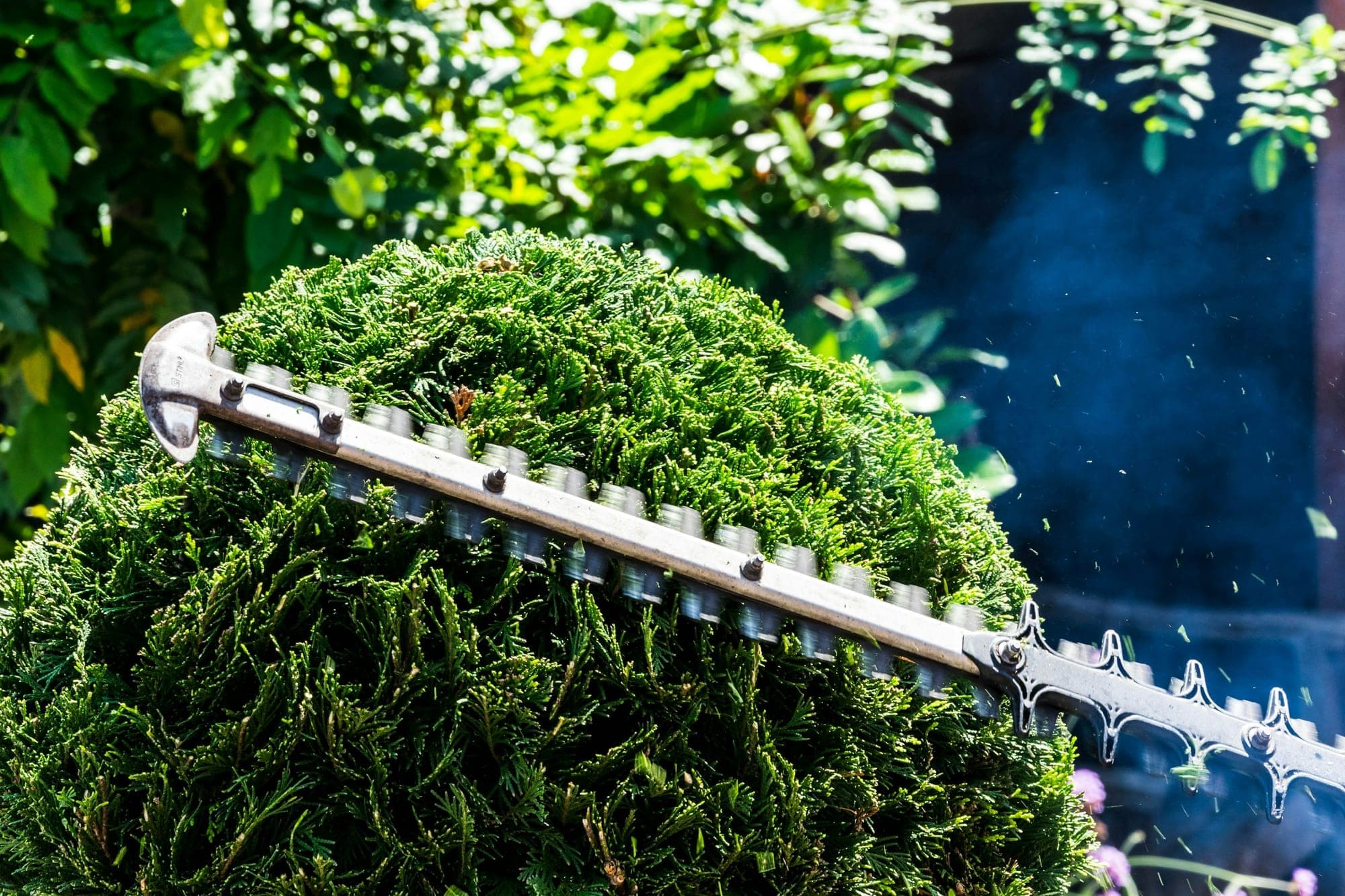
Treat this as a question about birds first and the calendar second. Nests are easy to miss in a thick hedge, and the right month for a beech is not the right month for a privet.
This guide puts the legal position next to the plant advice, so you can see where the two agree and where you have to make a call.
What the law says, and what it leaves to you
The Wildlife and Countryside Act 1981 makes it an offence to intentionally damage or destroy a wild bird's nest while it is in use or being built. It does not set a closed season for garden hedges. There is no date on which cutting suddenly becomes illegal. What the Act creates is a duty to be sure, before you cut, that nothing is nesting in the hedge. It covers England, Scotland and Wales; Northern Ireland has its own Order.
The RSPB recommends doing hedge work outside the main nesting season, ideally in autumn and winter, and checking thoroughly if you have to cut during it. The RHS treats March to August as the usual nesting season and points out that it can run longer, so a cut in the first days of September is not automatically risk-free.
You may see 1 March to 31 August quoted as if it were a general rule. That cutting ban comes from the Management of Hedgerows (England) Regulations, which came into force in 2024 and are written for hedgerows on agricultural land. It is a useful guide to when birds are busiest. For a hedge round a house, the nesting-bird rule above is the one that applies.
Timings by hedge type
The RHS gives different timings for different plants, and most of them fall in summer:
| Hedge | RHS timing | How often |
|---|---|---|
| Beech | Late summer, in August | Once a year |
| Hornbeam | Mid to late summer | Once a year |
| Holly | Late summer | Once a year |
| Hawthorn | Summer and autumn | Twice a year |
| Yew | Summer and autumn | Twice a year |
| Privet, box, Leyland cypress | During the growing season | Two or three times a year |
| Cherry laurel | During the growing season | Twice a year |
Two things stand out. First, a formal hedge may need two or three cuts a year to stay sharp, while an informal one usually needs one. Second, conifers are the exception to "any time in the growing season": the RHS says trimming them after August can leave bare patches, although it lists an autumn cut for yew.
Beech and hornbeam are worth a note. They hold on to their dead leaves through winter, so a late-summer cut keeps the hedge screening the garden when other deciduous hedges are bare. If you miss August with a beech, the RHS suggests trimming the following spring instead.
Where the plant timing and the nesting season collide
Look at the table again and you will see that most of those cuts fall inside the March to August window; the RHS timings tell you what suits the plant, while the nesting rules tell you whether a particular cut is safe on a particular day.
In practice:
- A cut in September or later has the lowest nesting risk. It suits most hedges, but not most conifers, which the RHS says should not be trimmed after August (it lists yew's second cut in autumn).
- A cut in August is usually fine for the plant but needs a careful check, because broods can still be in the hedge.
- A cut in spring or early summer needs a very good reason, such as safety, and a thorough check beforehand.
How to check a hedge for nests
- Walk the full length of the hedge on both sides and watch for birds flying in with food or flying out when you approach.
- Listen for chicks.
- Part the foliage at several points, especially in the thick, dark middle of the hedge.
- Cut one short section first, then look again before carrying on.
An overgrown hedge needs a different plan
A hedge that has been left for years cannot always be put right in one go, whatever the urge to finish it in an afternoon. For an overgrown beech, the RHS suggests cutting hard in February, while the plant is dormant, and holding off if the weather is very cold. If you need to take off half the height or width or more, it advises cutting one side and the top in the first year and the other side the following year.
The plant matters here. Most conifers, Leyland cypress included, do not regrow from old wood, so cutting into bare brown stems can leave a permanent gap. If you are unsure what the hedge is, identify it before you reduce it.
When it is worth getting someone in
Cutting a hedge yourself is reasonable up to a height you can reach safely from stable steps. Beyond that, it is worth a quote if:
- the hedge is taller than you can reach from the ground or a stable platform
- the cutting window is tight and you need a nest check done properly
- you want the clippings taken away instead of bagged and stored
If the hedge is leylandii, read how to cut back a leylandii hedge first, and if a neighbour has raised it, see how tall a hedge can legally be. Our hedge trimming and pruning service covers regular and taller hedges, and we take the clippings away. At the free visit we talk through the right timing for your particular hedge. You can ask for one on our contact page.
Sources
- RHS: Pruning hedges
- RHS: How to trim a hedge
- RHS: How to grow beech
- RSPB: What does the Wildlife and Countryside Act 1981 do?
- RSPB: How to report crimes against wild birds
- RSPB: What protections do hedgerows have when it comes to planning?
This article sets out Aspen Rose's own reading of the law and the RHS and RSPB guidance above, useful background on timing a hedge cut, not professional advice for your particular hedge. Every hedge and every nest check is different, so if in doubt, get a free, no-obligation quote and we'll take a proper look.
Hedge trimming questions
Can a neighbour make me cut my hedge?
In England, only in particular cases under the high hedge rules. They cover a line of two or more mostly evergreen or semi-evergreen trees or shrubs over 2 metres tall that acts as a barrier to light, and a neighbour must try to settle it with you first before asking the council. The council can require a reduction, but not removal or a cut below 2 metres, and ignoring a notice can mean a fine of up to £1,000. The [GOV.UK guidance](https://www.gov.uk/government/publications/high-hedges-complaining-to-the-council/high-hedges-complaining-to-the-council) explains the process.
How often does a hedge need cutting?
It depends on the plant and on how formal you want it to look. The RHS says informal hedges usually need one cut a year, while formal hedges may need one, two or three. Flowering informal hedges are best cut once, at the time that suits their flowers, because cutting at the wrong moment reduces flowering.
What should I do with the clippings?
The RHS suggests raking them off the top of the hedge so light reaches the cut stems, then composting them in layers or using your council's green waste collection. If you hire someone to take them away, ask who they are and where the waste goes, because as the householder you have a duty of care for waste leaving your property.
Related services
- Hedge Trimming & PruningHedge trimming and pruning across London and Hertfordshire — precise, expert shaping for hedges, shrubs and trees from Aspen Rose. Get a free quote.
- Garden MaintenanceRegular garden maintenance across London and Hertfordshire — mowing, pruning, weeding and seasonal care from an experienced team. Get a free quote.
More from the blog
All articles →
Want a hand with your garden?
Tell us what you have in mind and we'll arrange a free, no-obligation visit and quote.
Free, no-obligation visit · Mon – Fri: 9:00 – 18:30