
Hedges, trees & pruning
A Leylandii Hedge Punishes the Wrong Kind of Cutting Back Harder Than Almost Any Other Plant
Leylandii only regrows from green growth. Here is how much you can take off in one go, when to do it, and what to do if the hedge has gone too far to rescue.
By the Aspen Rose team6 min read
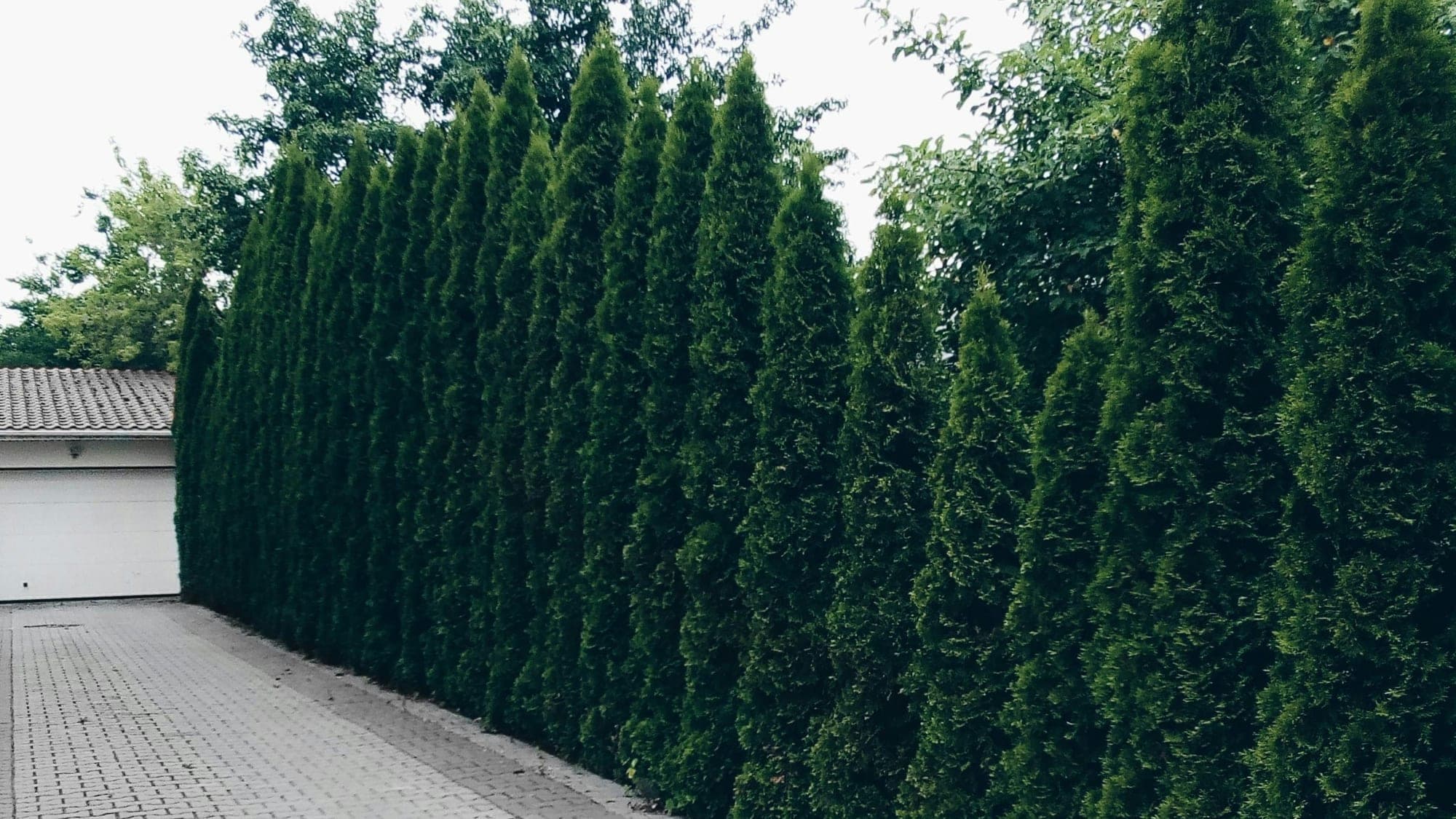
Leylandii (Leyland cypress) grows fast and forgives regular trimming generously. It does not forgive a single heavy cut into the dead-looking interior, and unlike most garden mistakes, this one cannot be undone.
The advice below follows the RHS guidance for this plant and for overgrown conifer hedges.
Why can't you cut a leylandii back into old wood?
Leylandii does not sprout new shoots from bare, leafless wood. The RHS says most conifers behave this way, and it names Leyland cypress as intolerant of hard pruning. Yew is the conifer that does regrow from old wood, so advice for a yew hedge does not carry over.
In practice, a cut that goes past the last green foliage leaves a brown patch that stays brown. Before you cut, push the foliage aside and look at where the green growth ends. That is your limit on the sides, whatever height you want to reach.
How much can you take off the height?
A healthy leylandii can usually lose up to a third of its height in one go. The RHS recommends doing this in early April, so the hedge has the whole season to recover.
If you need more than that, the RHS says it is possible but not recommended. Take the first third off, wait until the plants have recovered, and then reduce the remaining growth by up to half. Its renovation guidance says to allow at least a full growing season for recovery, and warns that a hedge reduced by more than a third may not fill out again.
| What you want | What the RHS advises |
|---|---|
| Lower the hedge a little | Up to a third of the height in early April |
| Lower it a lot | Not recommended; one third first, a full growing season to recover, then up to half of what is left |
| Narrow it | Cut only where there is green growth; thin some side branches to let in light and air |
| Fix a bare brown patch | Bare wood will not reshoot, so a brown patch stays brown |
Cutting too much from the top at once risks more than a bad-looking hedge; it can leave a bare, flat profile and may kill older plants.
When in the year should you cut leylandii?
The RHS gives April to the end of August, with no more than three cuts in that period. Trimming conifers after August can leave brown patches, so a late autumn or winter cut is not a good way to avoid the busy season.
An established hedge usually needs two or three trims in that window to stay in shape. A young hedge is trained differently: the RHS says to leave the top alone until it reaches the height you want, then cut the leading shoots about 15cm below that final height so it thickens.
What about nesting birds?
The timing above overlaps with the nesting season. The RHS gives March to August as the usual nesting period and says it can run longer, and early April is inside it. The RSPB notes that many garden birds nest within a few metres of the ground, in hedges, shrubs, trees and climbers.
Damaging a nest that is in use or being built is an offence under the Wildlife and Countryside Act 1981, so check the hedge before you start and cut a short section first. If you find a nest, leave that stretch alone until the young have left, even if that pushes the cut back a few weeks. Our guide to when to trim a hedge covers the check in detail.
What shape should the hedge be?
Cut the sides so the hedge is wider at the base than at the top, like a flat-topped letter A. The RHS says this lets light reach the lower growth, so the base does not turn brown and bare.
Cover up when you work. The RHS notes that the foliage can irritate skin.
When should you remove it instead?
Removal makes sense when the hedge is already bare and brown inside, or when you cannot commit to regular cutting. The RHS says leylandii makes an effective hedge only if it is kept under control, and suggests that where long-term care and size control are not possible, a fence may be the better boundary.
A neighbour's complaint is another route to the same question. Under the high hedge rules, a council can require a hedge to be reduced but not removed, and the RHS says it may phase the reduction, for example over three years, to lower the risk of killing it. The height and the complaint process are explained in how tall a hedge can be.
When is it worth getting a professional?
A tall leylandii is difficult and expensive to cut, the RHS says, and getting it wrong is costlier still, because a bare patch cannot be undone at any price. If the top is beyond what you can reach safely from the ground or stable steps, the job needs the right access equipment and someone who knows when to stop cutting.
Our hedge trimming and pruning service covers regular trims and reductions, and we take the clippings away. If the plants have grown into trees that need felling or crown reduction, that is work for tree surgery. Either starts with a free visit and a written quote.
Sources
- RHS: Leyland cypress pruning
- RHS: Hedges, renovation techniques
- RHS: Pruning hedges
- RHS: Hedges, nuisance and overgrown
- RSPB: Birds' nests and nestboxes
- GOV.UK: High hedges, complaining to the council
This article sets out Aspen Rose's own reading of the RHS guidance above, useful background on cutting back a leylandii safely, not professional advice for your particular hedge. Every hedge is different, so if in doubt, get a free, no-obligation quote and we'll take a proper look.
Leylandii hedge questions
Can I cut a leylandii hedge in winter?
It is better not to. The RHS says trimming conifer hedges after August can cause bare patches, and gives April to August as the cutting window. If a hedge must be cut at another time, cut well inside the green growth.
Why has my leylandii gone brown after cutting?
The usual cause is cutting into old, leafless wood, which will not regrow. The RHS also lists cypress aphid, which can cause extensive browning, and says cutting outside the growing season can leave patches. Brown foliage that is still alive may recover, but bare wood will not.
Does a leylandii hedge need feeding or watering after a big cut?
Not routinely. The RHS says to feed only if regrowth is poor, and otherwise to mulch with organic matter. It also suggests watering during prolonged dry spells in the first growing season after a reduction.
Related services
- Hedge Trimming & PruningHedge trimming and pruning across London and Hertfordshire — precise, expert shaping for hedges, shrubs and trees from Aspen Rose. Get a free quote.
- Tree SurgeryQualified tree surgery across London and Hertfordshire — reductions, crown work and removals from Aspen Rose’s tree care specialists. Get a free quote.
More from the blog
All articles →
Want a hand with your garden?
Tell us what you have in mind and we'll arrange a free, no-obligation visit and quote.
Free, no-obligation visit · Mon – Fri: 9:00 – 18:30