
Hedges, trees & pruning
There's No Legal Height Limit on Garden Hedges in England, Just a Line That Can Still Get You Reported
There is no general maximum height for a garden hedge. The law only gives a neighbour a way to complain about evergreen hedges over 2 metres that block light, and the council can order a reduction, not removal.
By the Aspen Rose team7 min read
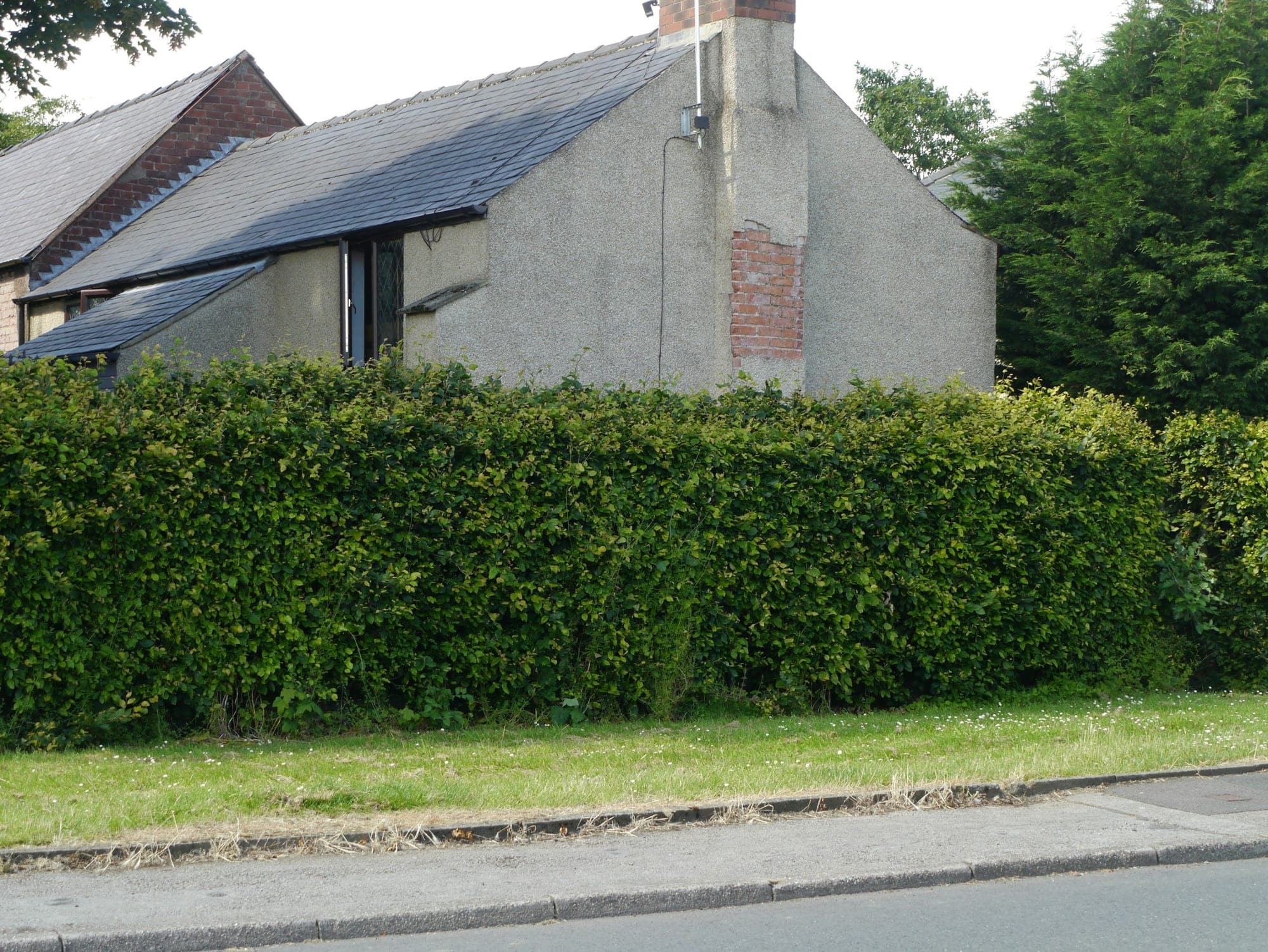
This is general information, not legal advice. It follows the GOV.UK guidance for England, where Part 8 of the Anti-social Behaviour Act 2003 applies. Part 8 covers Wales too, but with its own fee rules and guidance. Scotland and Northern Ireland have separate laws (the High Hedges (Scotland) Act 2013 and the High Hedges Act (Northern Ireland) 2011), which this article does not cover. Check with your council before you act.
Is there a legal height limit for a hedge?
No height limit applies to a hedge as such, and this is worth saying plainly because the opposite assumption is everywhere. The 2003 Act does not stop anyone growing a hedge above 2 metres, and the RHS says it cannot be used to prevent a hedge from growing at all. What it does instead is give a neighbour a complaint route after the fact, and only for hedges that meet a specific description. A hedge outside that description can be any height you like.
The 2 metre figure is a threshold for complaints, not a ceiling, and conflating the two is where most of the confusion comes from. It is also separate from the planning rule for fences, gates and garden walls, which the Planning Portal sets at 1 metre beside a road or footpath and 2 metres elsewhere. That page does not mention hedges at all.
What counts as a high hedge?
The description is specific, and missing just one element takes a hedge out of scope entirely. For the council to take a complaint seriously, GOV.UK says the hedge must:
- grow on land that someone else owns or occupies
- be a line of two or more trees or shrubs
- be mostly evergreen or semi-evergreen
- be more than 2 metres above ground level, measured where it grows
- act as a barrier to light or access, even with gaps in it
- harm the reasonable enjoyment of the complainant's home or garden
A hedge that loses its leaves does not qualify, which rules out a good number of common garden hedges straight away. GOV.UK gives privet that drops its leaves in winter as an example, and says beech and hornbeam, which keep their dead leaves, do not count either. A single tree or shrub falls outside the rules too. So do problems caused by roots, such as subsidence, however real the damage is.
How does a neighbour complain?
A neighbour has to try to settle the matter directly first, and the council is genuinely a last resort rather than a first phone call. GOV.UK says the council can reject a complaint outright if the complainant has not taken all reasonable steps to resolve the dispute themselves.
If that fails, the complaint goes to the council in writing, usually on its own form. The council normally charges a fee, which it sets itself within a national maximum, and GOV.UK says that fee is usually not refunded and cannot be recovered from the hedge owner, even when the complaint succeeds.
The council does not mediate between the two of you. It hears the owner's side, visits, measures the hedge and weighs the facts, with no fixed deadline for a decision, so patience matters on both sides.
What can a council order, and what can it not?
A council can require the owner to reduce the hedge to a stated height and to keep it there going forward. It can allow extra time, including to protect nesting birds. The law sets no particular height, and GOV.UK says 2 metres is not always the right answer; the RHS says the council weighs factors such as loss of light, a slope or a blocked view instead.
The limits on what a council can do are just as firm, and worth knowing if you are the hedge owner rather than the complainant. The council cannot:
- order the hedge to be removed
- require it to be cut below 2 metres
- deal with root damage
Do any other rules affect hedge height?
A few other rules touch hedges, but none of them are a backdoor height limit.
- Hedges beside roads and paths. Under section 154 of the Highways Act 1980, a council can serve a notice on the owner of a hedge, tree or shrub that overhangs a highway or public footpath and endangers or obstructs people, or blocks a driver's view or a street light. The notice gives 14 days, and the council can do the work and recover its costs if it is ignored. It concerns overhang and visibility, not height.
- Countryside hedgerows. The Hedgerows Regulations 1997 protect some hedgerows beside farmland and common land, but they exclude hedges within or along the boundary of a home's curtilage.
- Nesting birds. Reducing a hedge is still cutting it, so the Wildlife and Countryside Act 1981 applies if a nest is in use. Our guide to when to trim a hedge explains the check.
What should you do if your own hedge is getting tall?
If it is evergreen and above 2 metres, the practical risk is a complaint, not a fine out of nowhere, and it is worth managing before it becomes one. The RHS notes that cutting a hedge below the height a council specifies gives it room to regrow between trims while staying within the limit.
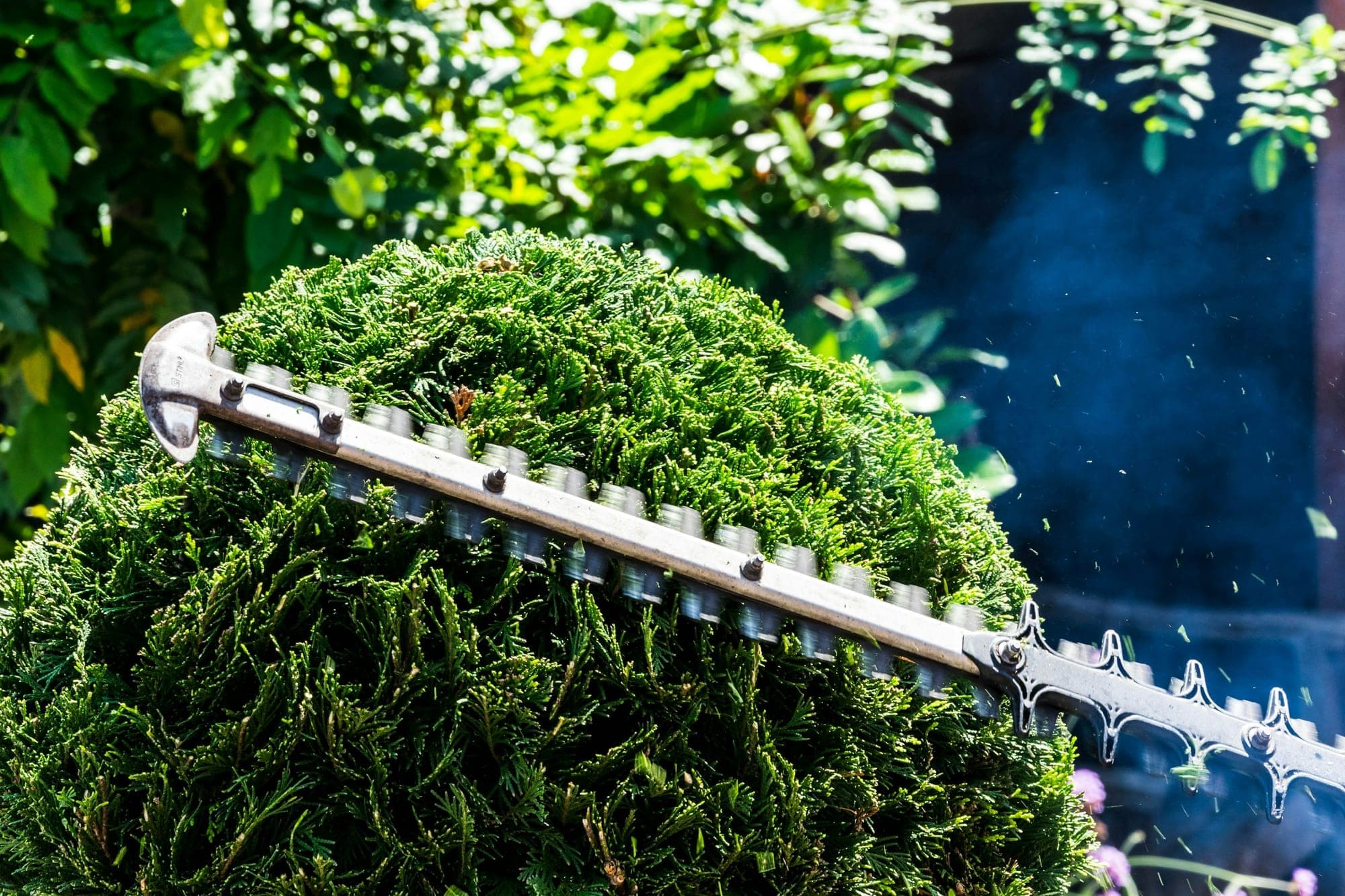
How you reduce it depends entirely on the plant. Conifers such as leylandii cannot be cut into bare wood, so the reduction has to be staged over more than one visit: see our guide to cutting back a leylandii hedge. If the hedge is too tall to reach safely, our hedge trimming and pruning service covers reductions and regular trims, and we take the clippings away.
Sources
- GOV.UK: High hedges, complaining to the council
- GOV.UK: Over the garden hedge
- Anti-social Behaviour Act 2003, Part 8 (legislation.gov.uk)
- Highways Act 1980, section 154 (legislation.gov.uk)
- Hedgerows Regulations 1997, regulation 3 (legislation.gov.uk)
- Planning Portal: fences, gates and garden walls
- RHS: Hedges, nuisance and overgrown
- Citizens Advice: If you disagree with your neighbour about a tree or hedge
This article sets out Aspen Rose's own reading of the high hedges rules above, not legal advice. What counts as a "barrier to light", how a council weighs a complaint, and which exemptions apply can all be more nuanced than this summary, so check with your council before acting on anything here that really matters.
Hedge height questions
What happens if the hedge owner ignores a high hedge notice?
Ignoring it is an offence, with a fine of up to £1,000 according to GOV.UK. The council can also enter the land, do the work and recover its costs from the owner. A notice takes effect at least 28 days after it is issued, and it is registered as a local land charge.
Is the 2 metres measured from my side or my neighbour's?
From the ground where the hedge grows, usually the base of the trunk or main stem. GOV.UK says that on a bank or raised bed, the natural ground level is used. So the hedge owner's ground level is what matters, not the complainant's.
Can I trim my neighbour's hedge myself?
You may trim branches that overhang your side, but GOV.UK says that doing more could expose you to a court claim for damaging your neighbour's property. If the hedge includes protected trees, the council's separate permission may be needed first.
Can the owner appeal a high hedge notice?
Yes. In England, the Act allows an appeal against a remedial notice within 28 days, and GOV.UK says either the complainant or the neighbour can appeal to the Planning Inspectorate. Check the notice itself and your council's letter for the deadline that applies.
Related services
More from the blog
All articles →
Want a hand with your garden?
Tell us what you have in mind and we'll arrange a free, no-obligation visit and quote.
Free, no-obligation visit · Mon – Fri: 9:00 – 18:30