
Hedges, trees & pruning
Prune Roses at the Wrong Time and You're Not Shaping Next Year's Flowers, You're Cutting Them Off
Most roses are pruned in late winter, but ramblers and once-flowering shrub roses are cut in late summer, and climbers in winter. Here is how to tell which rose you have and when to cut it.
By the Aspen Rose team7 min read
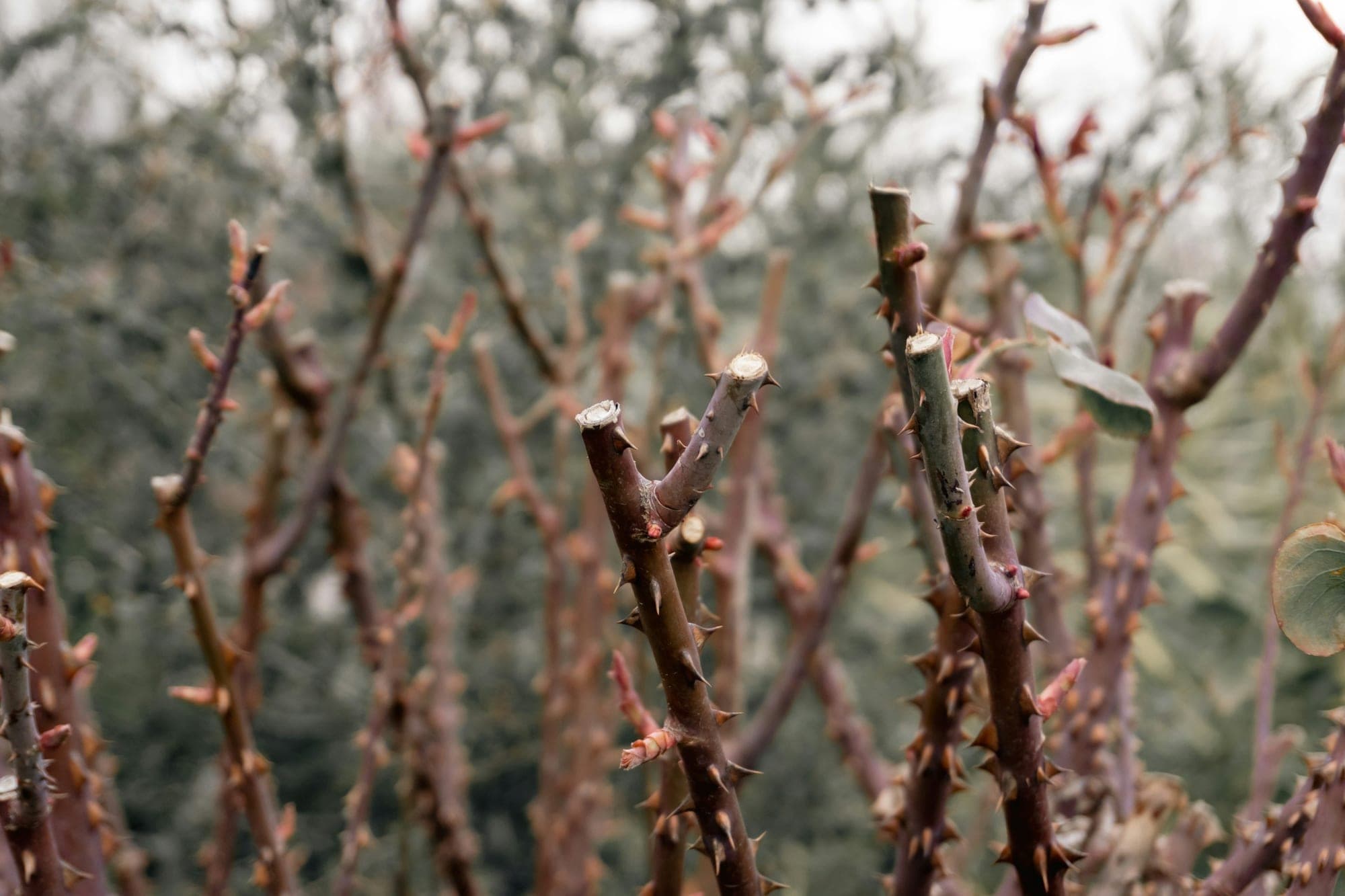
"Prune roses in February" is the advice you will see most often, and it is only half right: it holds for bush roses and quietly ruins a rambler. Prune a rambler in February and you cut off the wood that was about to carry next summer's flowers, which is probably the single most common rose-pruning mistake there is. The first job, before any secateurs come out, is working out what type of rose you actually have. Dates and cut sizes below come from the RHS guides for each type.
How do you tell which type of rose you have?
The quickest clue is how often it flowers. The RHS says climbing roses repeat-flower through summer, while ramblers usually flower once, normally around June. In winter the two look alike, so note which you have.
If you have inherited a rose and cannot wait to see it flower, the RHS gives a fallback for each shape:
- A tall rose on supports: if it has one thick old stem, shorten it by a third to a half. If it has several stems, take out one or two of the oldest, recognisable by grey, flaky bark, at or near the base. Strong shoots that do not flower the next year suggest a rambler.
- A free-standing bush: take out one or two stems at or near ground level and shorten the rest by a third to a half. If it regrows vigorously and flowers well, it is probably a hybrid tea or floribunda.
- Any unidentified rose: the RHS says to prune it in February or March.
When to prune each type of rose
| Rose type | When (RHS) | How much |
|---|---|---|
| Hybrid tea | Late winter: about mid-February in the south, March in the north | Strongest shoots to 4 to 6 buds, 10 to 15cm from the base; weaker shoots to 2 to 4 buds |
| Floribunda | As for hybrid tea | Strongest shoots to 25 to 30cm above soil; weaker shoots harder |
| Repeat-flowering shrub rose | Late winter | Reduce strong new growth by up to a third; shorten side shoots to 2 or 3 buds. For English roses, the RHS says to shorten last season's growth by 30 to 50% |
| Once-flowering shrub rose | Late summer, after flowering | Light: dead, damaged and crossing wood, and one or two old stems if crowded |
| Climber | December to February, after the flowers have faded | Flowered side shoots back by about two thirds |
| Rambler | Late summer, after flowers and hips | Cut about a third of the oldest stems to the ground; side shoots back by about two thirds |
| Groundcover | Late winter; spreading rambler types in summer after flowering | Little needed; strong shoots back by about a third |
Patio and miniature roses have their own RHS guide, not covered here.
The RHS says bush roses should be pruned when growth is just starting, which is why the date moves with the region rather than the calendar. London sits in the southern part of that range, so mid-February is a reasonable target, but the buds are the real guide, not the date on the fridge calendar. Many shrub roses arch, so keep the cuts light: cutting hard just to limit a rose's spread is a common overcorrection, and the RHS says it spoils the graceful shape for no gain.
What do you do on the day?
The method is the same for every type. Start with the stems that should always go: dead, diseased, thin and spindly wood, and stems that cross or rub. If the bush is crowded, cut some old shoots out completely so the centre stays open.
Then cut each remaining stem no more than about 5mm above a bud, sloping the cut down and away from the bud so rainwater runs off. Choosing an outward-facing bud gives an open shape. If a stem has died back, cut it to healthy white pith. Use sharp secateurs, with loppers or a pruning saw for thicker stems, and wear gloves.
Once pruned, the RHS suggests feeding with a general-purpose or rose fertiliser in spring, and mulching at least 5cm deep between November and February with garden compost or well-rotted manure.
Do roses need pruning when birds might be nesting?
Late-winter pruning falls just before the nesting season, and late-summer pruning falls inside it. The RSPB gives March to September as the main nesting season, and the RHS gives March to August as the usual window, noting that it can run longer. Under the Wildlife and Countryside Act 1981 it is illegal to intentionally damage or destroy a wild bird's nest while it is in use or being built.
For roses, that mostly affects ramblers and climbers. The RSPB notes that birds nest in climbers such as ivy, where the cover hides nests from predators, so check thoroughly inside the growth before cutting. It also advises watching the plant for several days: birds going back and forth are nesting, while birds that leave at dawn and return at dusk are more likely roosting.
If you find an active nest, leave that stem until the young have gone. A rambler can wait a few weeks. Our guide to when to trim a hedge explains the same legal point in more detail.
When is it worth getting help?
A bush rose is a job for secateurs and twenty minutes. A rambler over a pergola, or a climber on a first-floor wall, is a different job entirely: a ladder, a decision about which stems earn a place for another year, and a method that is easy to get wrong in a way that costs you flowers rather than just tidiness. The RHS renovation method for both is to cut some old woody branches to the base, keep no more than six young, vigorous stems to tie in, and saw off dead stumps that would hold water and rot.
Our hedge trimming and pruning service covers pruning as well as hedge trimming, and we take the cuttings away. If the roses are part of a wider tidy-up, a regular garden maintenance visit can include them. You can ask for a free visit to talk it through.
Sources
- RHS: Rose pruning, general tips
- RHS: Floribunda and hybrid tea roses
- RHS: Shrub roses
- RHS: Climbing roses
- RHS: Rambling roses
- RHS: Groundcover roses
- RSPB: Birds' nests and nestboxes
- RSPB: What does the Wildlife and Countryside Act 1981 do?
This reflects what tends to work in most London and Hertfordshire gardens, not a guarantee for yours. A rose's timing depends on its own age and vigour as well as the type, so treat the dates above as a starting point rather than a fixed rule — get in touch if you'd like a proper assessment of your own garden.
Rose pruning questions
Can I prune roses in autumn?
Only lightly. The RHS says long, whippy shoots on climbers can be shortened or tied in during autumn so strong winds do not damage them, and rambler renovation can be done from late autumn to late winter. The main pruning of bush roses is left until late winter.
Should I deadhead roses?
Yes, in most cases. The RHS advises deadheading through the flowering season to encourage more flowers on repeat-flowering roses. Leave the flowers on a rambler or once-flowering shrub rose if you want to keep the hips for display.
What if my roses flower poorly after pruning?
The RHS says few or no flowers on a rambler can come from incorrect pruning or unsuitable growing conditions. Check that you have cut at the right time for the type, and whether the plant gets enough sun, feeding and water.
Related services
- Hedge Trimming & PruningHedge trimming and pruning across London and Hertfordshire — precise, expert shaping for hedges, shrubs and trees from Aspen Rose. Get a free quote.
- Garden MaintenanceRegular garden maintenance across London and Hertfordshire — mowing, pruning, weeding and seasonal care from an experienced team. Get a free quote.
More from the blog
All articles →
Want a hand with your garden?
Tell us what you have in mind and we'll arrange a free, no-obligation visit and quote.
Free, no-obligation visit · Mon – Fri: 9:00 – 18:30