
Design & planting
Mulching the Wrong Way Can Starve Your Soil of the Exact Thing You're Trying to Add
Mulch flower beds in late winter or early spring while the soil is damp, 5 to 7.5cm deep, and keep it about 10cm clear of woody stems. Here is how to choose a material and avoid the common mistakes.
By the Aspen Rose team6 min read
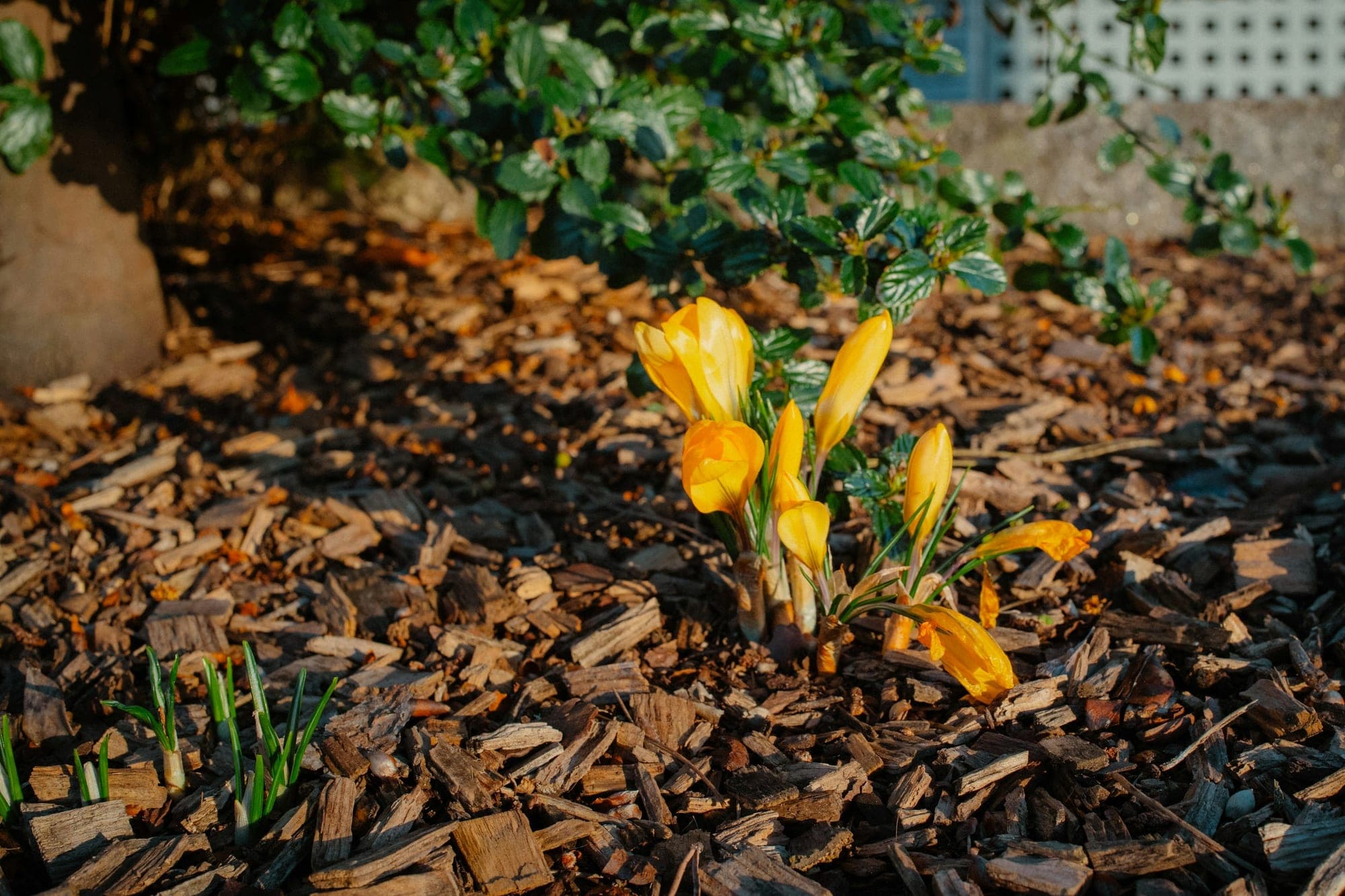
Mulching is one of the easiest garden jobs to get visibly wrong while feeling like you have done everything right. Most mistakes come down to the wrong time, too thin a layer, mulch piled against stems, or fresh wood dug into the soil instead of left on top, and that last one can actively rob plants of the nitrogen the mulch was meant to feed them. This guide follows the RHS advice and points out where its pages differ slightly.
What does mulch actually do?
Mulch is a layer of material spread over the soil surface. The RHS lists the benefits as saving water, suppressing weeds, improving the soil and giving a neat finish. In summer it helps the soil hold moisture. In winter it protects roots.
Depth matters more than almost anything else here, because a thin layer does little beyond looking tidy for a few weeks.
When is the best time to mulch a flower bed?
Late winter to early spring is the ideal moment, according to the RHS guidance on mulching with organic matter. The soil is still damp from winter rain, and the mulch holds that moisture in for the growing season.
The RHS gives a wider window as well. Its general mulching page also names mid to late spring and autumn, and a glossary entry on both pages gives late autumn to late winter, November to February.
So there is no single date. The conditions matter more:
- The soil should be moist. Mulch laid over dry ground keeps the dryness in.
- It should not be frozen or waterlogged. The RHS says to delay if the soil is very wet and squelchy, or frozen.
- Weeds should be dealt with first. Mulch smothers low annual weeds, but perennial weeds need digging out beforehand.
- New plantings can be mulched at any time of year, again onto moist soil.
How deep should mulch be?
For compost, leaf mould, well-rotted manure and bark, spread at least 5cm (2 inches) and ideally 7.5cm (3 inches). Woody chippings are the exception: the RHS gives about 8 to 12cm (3 to 5 inches) for those.
A thin dusting does little, and thin gravel is worse: the RHS warns it can mix into the soil and encourage weeds.
For quantities, the RHS says one cubic metre of organic mulch covers about 15 to 20 square metres, and a 70-litre bag covers about one square metre.
How close to the stems should mulch go?
Leave a gap of about 10cm (4 inches) around woody stems and trunks. The RHS says mulch piled against woody stems can soften them and make them vulnerable to disease. Its woody-waste page gives the gap as 8 to 10cm, so anything in that range is consistent with the advice.
Emerging perennials need a different approach. The RHS suggests covering each crown with an upturned pot while you spread the mulch, then lifting it off.
Some plants do better without any. The RHS says thyme and similar Mediterranean ground covers may be best left unmulched, because the layer can hold too much moisture around their stems and leaves.
Which mulch should you use?
The RHS divides mulches into two groups.
| Type | Examples | What to know |
|---|---|---|
| Biodegradable | Garden compost, leaf mould, well-rotted manure, composted bark, wood chippings | Feeds the soil as it rots and needs topping up once it has broken down |
| Non-biodegradable | Gravel, slate, shingle, pebbles | Suppresses weeds and holds moisture, but adds no fertility |
For flower beds the RHS lists garden compost, wood chippings, processed conifer bark, leaf mould and well-rotted manure among the best biodegradable mulches. It also says a dark mulch warms the soil while pale gravel reflects light and keeps roots cooler.
Avoid waterproof sheets, which the RHS says can cause run-off and drainage problems. Under mulch on a new bed, use a permeable fabric.
A caution on fresh wood chippings
Fresh broadleaf and conifer chippings can contain compounds that harm germinating seeds and young plants. For a newly planted bed the RHS suggests ageing chippings first: stack them in a pile for three to four months. Established plants are much less affected.
Here is the mistake that undoes the whole point of mulching: digging woody material into the soil instead of leaving it on the surface. The same RHS page says spreading woody mulch on top is not likely to cause nitrogen shortage in established plants, but digging it in can lock up nitrogen for up to two years, starving the soil of the exact nutrient you were trying to add. Keep chippings on top, always, and never use shredded treated timber or chipboard.
Can you mulch for free?
Yes, if you have time to wait. The RHS points to several sources you may already have:
- Leaf mould. Bag up fallen leaves in autumn and leave them. The RHS says most leaves take about two years to break down, and that leaf mould under two years old can be used as mulch. Our guide to what to do with garden waste covers where leaves and other waste can go.
- Home-made compost. The RHS says it can be ready in as little as six months under the right conditions.
- Chippings from your own prunings. Age them first if the bed has new plants.
- Dry grass clippings. The RHS says thin layers can mulch established plants, but fresh clippings can use up soil nitrogen, so let them dry or sit for a few weeks first.
Bulk deliveries are often better value than bags, and the RHS suggests sharing one with a neighbour.
What else goes wrong?
Poor-quality material can bring in weeds, pests or disease, and the RHS notes woodchips carry a slight risk of honey fungus. Hoeing through mulch around permanent plants can damage roots, so the RHS suggests pulling weeds by hand and adding fresh mulch.
When it helps to bring someone in
A single bed is a short job. Larger borders are heavy work. If you would rather not shift several cubic metres yourself, our flowerbed mulching service is one option, and you can ask for a free no-obligation visit and written quote through the contact page.
Sources
- RHS: Mulches and mulching
- RHS: How to mulch with organic matter
- RHS: Woody waste, using as mulch
- RHS: How to deal with garden waste
This reflects what tends to work in most London and Hertfordshire gardens, not a guarantee for yours. Soil type, drainage and what is already growing in a bed all vary street to street, so treat this as a starting point rather than a fixed rule — get in touch if you'd like a proper assessment of your own garden.
Mulching questions
Is mulch the same as compost?
Not exactly. Mulch is any layer spread on the surface, and compost is one material you can use for it. Gravel, bark and leaf mould are also mulches. What makes it a mulch is where it goes and the job it does there.
Does mulch stop all weeds?
No. The RHS says it suppresses them, not removes them. Perennial weeds should be dug out beforehand, and any that push through should be pulled by hand and covered with a little more mulch.
Can you put mulch on a new planting straight away?
Yes. The RHS says new plantings can be mulched at any time of year, onto moist soil. Just keep it clear of the stems, and use aged chippings and not fresh ones if wood is your choice.
Related services
More from the blog
All articles →
Want a hand with your garden?
Tell us what you have in mind and we'll arrange a free, no-obligation visit and quote.
Free, no-obligation visit · Mon – Fri: 9:00 – 18:30