
Design & planting
Most "Shade-Loving" Plant Lists Ignore the One Variable That Decides Whether Yours Survive
The best plant for a shady spot depends on whether the shade is dry or damp. Here are a few reliable RHS-backed choices for each, plus what to expect under conifers and beside walls.
By the Aspen Rose team7 min read
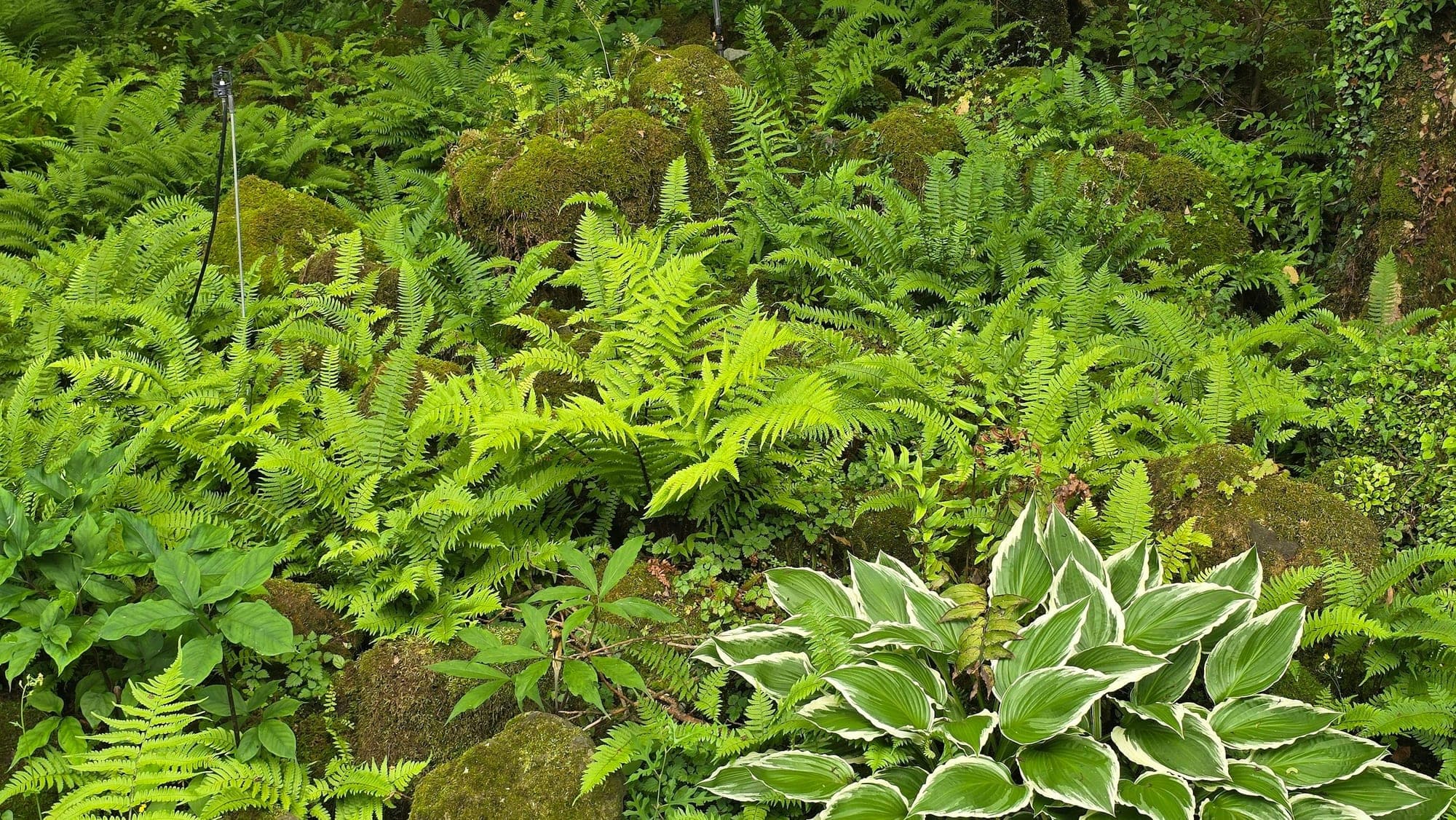
Most "shade-loving" plant lists treat all shade as one condition, which is exactly why so many of the plants on them die within a season. A fern that thrives beside a downpipe will sulk under a mature tree, and a hosta that suits a damp border scorches and shrivels where the soil dries out. Light is not the variable that decides whether a shade planting survives. Moisture is.
So this guide starts there: read your own shade correctly first, then choose from a short, RHS-checked list for each type. Skip that first step and the plant list is just a guess.
How much shade do you actually have?
The RHS sorts shade by how much direct sun a spot gets at midsummer. More than six hours is sun. Three to six hours is partial shade, two to three is moderate shade, and under two hours is deep shade. Dappled shade is filtered light, such as through an open tree canopy, and light shade is open sky with direct sun blocked by a wall or trees.
Spend a day noting which parts of the garden get sun and when. A bed that looks shady in the afternoon may get a good morning of sun, and that puts it in a different category.
Is your shade dry or damp?
The second question is soil moisture, and the RHS treats the two cases separately.
| Dry shade | Damp shade | |
|---|---|---|
| Typical places | Under trees and shrubs, and beside house walls, especially under eaves | Heavy clay, high water tables, soil near ponds or streams |
| Main risk | Plants struggle with little light and little water | Waterlogging damages roots |
| What the RHS suggests | Tough, shade-tolerant plants, with compost or manure dug in and a mulch | Plants adapted to damp soil |
Soil close to a wall can be dry too. The RHS suggests planting about 45cm (18 inches) away from walls, since soil within roughly 40cm of them, especially under eaves, can be very dry.
If your soil is heavy clay, our guide to what grows well in clay soil explains how that affects the choice.
Which plants work in dry shade?
Three have good RHS backing for dry conditions.
Geranium macrorrhizum (big-root cranesbill). The RHS calls it one of the few plants that tolerate dry shade. Its plant entry lists full sun, partial shade or full shade, moist but well-drained or well-drained soil, and hardiness H7, the top rating, hardy below -20°C. It is a ground-cover perennial up to about 50cm tall and 1m wide, and the RHS says it suits chalk, clay, loam and sand but dislikes waterlogged ground.
Epimedium × versicolor 'Sulphureum' (barrenwort). The RHS cites this one as an epimedium that tolerates dry shade under trees. Its entry says it grows best in partial shade but tolerates full shade or full sun, and prefers fertile, humus-rich soil that stays moist but drains well, though it copes with slightly drier soil. It has H7 hardiness and grows to about 35 to 50cm. No pruning is needed, but the RHS says the evergreen foliage can be sheared in early spring to show off the flowers, and in cold gardens that can expose new growth to frost.
Male fern (Dryopteris filix-mas). The RHS lists full or partial shade, moist but well-drained or poorly drained soil, H7 hardiness, and tolerance of dry shade. It is a deciduous fern, 1 to 1.5 metres tall. The RHS says to water it regularly in its first season and mulch well.
Which plants work in damp shade?
Astilbe. The RHS growing guide says astilbes want rich, moist soil and a lightly shaded position, and do not tolerate waterlogging. Full sun can scorch the leaves and dry the soil. They die back in autumn, return each spring, and the RHS suggests cutting the old stems down in December or January. Vine weevil is the main pest to watch for.
Hostas. The RHS says most hostas grow best in partial shade and moist, fertile soil, which can be heavy clay improved with compost, and that they are not suited to dry soils. They are fully hardy. Slugs and snails are a major pest and can strip the leaves, although thicker-leaved varieties such as 'Devon Green' are less often eaten.
Male fern, from the dry shade list, is also listed for moist soil, so it links the damper and drier parts of a border. Check the drainage first: the RHS notes that too much moisture in the soil harms plant roots, and astilbe in particular dislikes waterlogged conditions. Damp shade is common on heavy clay, where the water table is high, and near ponds or streams.
What about deep shade under conifers?
Expect a very short plant list. The RHS says soil under conifers and evergreens is often dry and sheltered, and falling needles and debris can make it acidic, so only a limited range of very shade-tolerant plants survives. The RHS also notes that grass in shady areas often grows poorly and can become sparse.
In that situation, cover the soil with mulch, plant fewer species, and accept that it will look more woodland than border.
What goes wrong with the wrong plant?
The usual mistake is putting a sun-loving plant in shade and then blaming the shade when it sulks. The RHS says shade-tolerant plants are usually grown for their foliage rather than their flowers, and that in light shade many plants grow but may flower less. Go in expecting foliage, not a flower border, and the garden will meet or beat that expectation. If you want a lot of flower, aim for the lighter end of shade instead.
Preparing the soil and planting
Skipping the soil prep is where most shade borders fail, not the plant choice. The RHS recommends digging in plenty of garden compost or well-rotted manure before planting, and watering plants well before and after. A mulch at least 5cm thick, applied from late autumn to late winter, reduces water loss from the soil, and our guide on when and how to mulch flower beds covers timing and depth.
If you would rather have the beds planned for you, our planting and design service includes choosing plants to suit the light and soil. We offer a free no-obligation visit and written quote through the contact page.
Sources
- RHS: Shade gardening tips and plant ideas
- RHS: Plants for dry, shady spots
- RHS: Damp shade with flower and foliage interest
- RHS: Shade planting, annuals, bulbs and perennials
- RHS: Geranium macrorrhizum
- RHS: Epimedium × versicolor 'Sulphureum'
- RHS: Dryopteris filix-mas
- RHS: How to grow astilbe
- RHS: How to grow hostas
This reflects what tends to work in most London and Hertfordshire gardens, not a guarantee for yours. Shade falls differently street to street, and even bed to bed, so treat the plant lists above as a starting point rather than a fixed rule — get in touch if you'd like a proper assessment of your own garden.
Shade planting questions
Can you grow flowers in full shade?
Some, but fewer. The RHS says shade-tolerant plants are usually grown for their foliage, and that many plants in light shade may flower less. Epimedium and bergenia are named for dry shade, though the RHS says bergenia may not flower in deep shade. Aim for foliage first and treat flowers as a bonus.
Do shade plants need less watering?
Not necessarily. Shade from trees and walls often means dry soil, and the RHS says even plants that tolerate dry shade need regular watering in their first season. After that, mulching and a suitable plant choice reduce how much you need to water.
Are hostas a good choice for a small London garden?
They suit moist, partly shaded beds and containers, and are fully hardy. Slugs and snails are their main weakness, according to the RHS. In a dry, sheltered corner beside a wall, a plant such as Geranium macrorrhizum is a safer bet.
Related services
More from the blog
All articles →
Want a hand with your garden?
Tell us what you have in mind and we'll arrange a free, no-obligation visit and quote.
Free, no-obligation visit · Mon – Fri: 9:00 – 18:30