
Design & planting
Clay Soil Isn't a Problem to Fix. It's a Soil Type You Plant Against Instead of With.
Plenty of plants thrive in clay, including hardy geraniums, dogwoods and Japanese anemones. The trick is to improve the structure with organic matter and avoid plants that hate wet winters.
By the Aspen Rose team7 min read
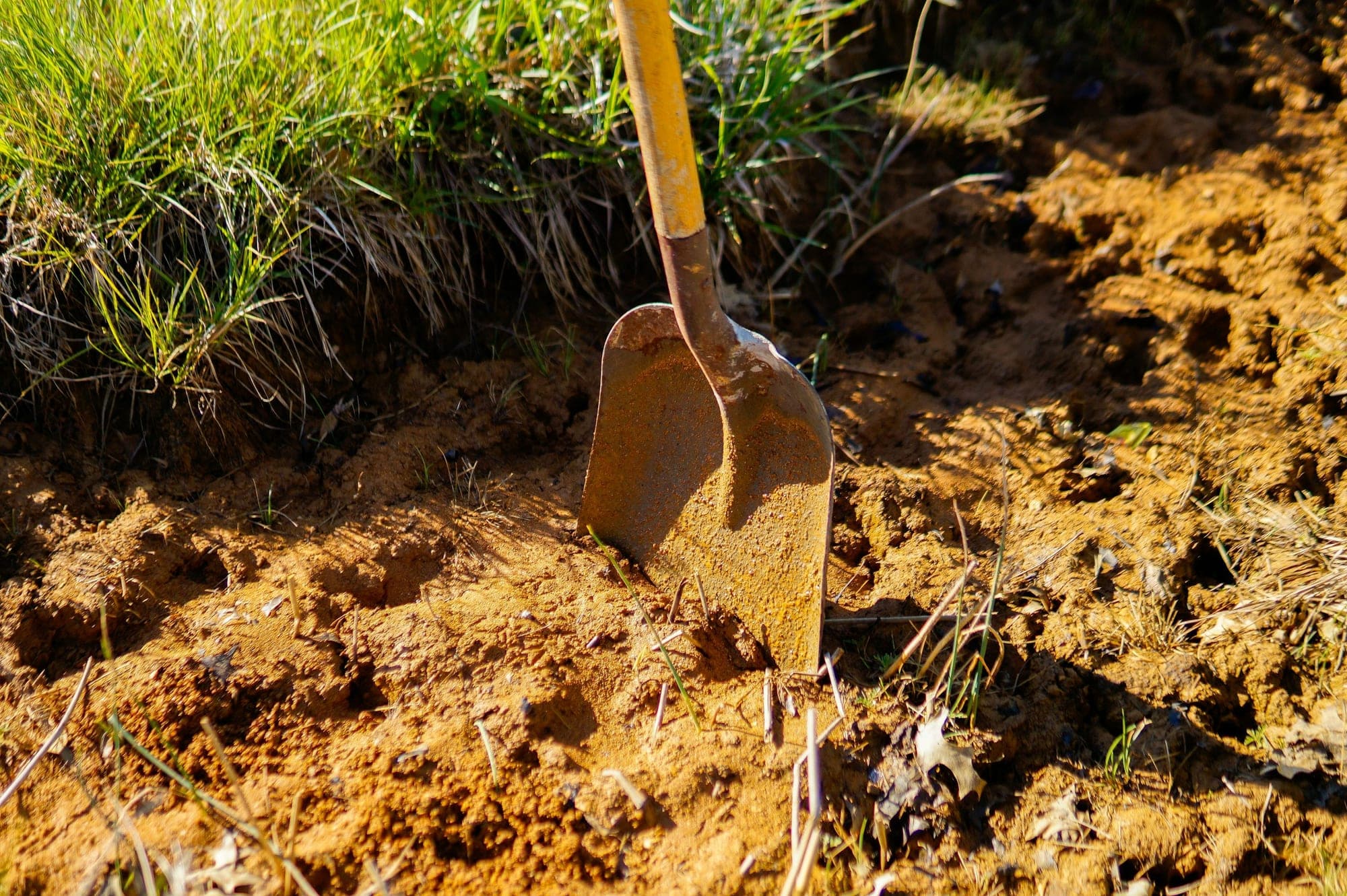
Clay has a bad reputation because it is sticky in winter and bakes hard in summer, and most advice responds by treating that as a fault to correct. It isn't one. The same soil is also the most fertile, water-retentive ground you can plant into, and the gardens that struggle with clay are usually the ones still fighting its texture instead of choosing plants that want what clay actually offers.
This guide covers how to tell whether your soil is clay, why a London garden is likely to have some, how to work with it rather than against it, and which plants reward you for doing so.
How can you tell if you have clay soil?
Roll a handful of damp soil between your palms. According to the RHS, clay can be rolled into a long, thin sausage and polished to a shine with a fingertip, and it feels smeary and sticky when wet. Lighter clays will not shine or roll as well.
Watch how it behaves through the year, too. The RHS says clay holds a lot of water, drains slowly, and compacts easily if walked on when wet. In summer it bakes hard and often cracks.
If water stays on the surface for a long time after rain, the RHS suggests a drainage check: dig a straight-sided pit about 60cm deep, cover it overnight, and look for water. Water collecting suggests a high water table. If it is dry, fill it with water and check after 24 hours. Water still there means poor drainage.
Is London soil clay?
Often, but not everywhere. The British Geological Survey says the London Clay Formation underlies most of the London district and is mostly silty clay, though much of it is hidden under superficial deposits of varying thickness. At the surface it weathers to brown, and below that it is grey to blue-grey.
That has two practical consequences. A garden in London may have clay a short way below the surface, and the topsoil above it may be something else. Do the feel test in your own beds, not just on a map.
What are the good and bad points of clay?
The RHS lists the advantages as high fertility, because clay holds nutrients, and good water retention that helps in dry spells. The drawbacks are slow drainage, a later warm-up in spring than sandy soils, easy compaction, and hard going in summer.
Treat that list as a trade, not a verdict: the drainage and compaction problems are real, but they are the price of the fertility, not a sign the soil needs replacing. Most advice for clay is about shifting the balance from the second list to the first, and that is the right instinct.
How do you improve clay soil?
Add organic matter, and keep adding it every year rather than once. The RHS says it helps break clay into crumbs and noticeably improves how the soil works, and the improvement is cumulative, not a one-off fix you do before planting and then forget. For soil that drains poorly, its wet-soils guide suggests about one barrow load per square metre, dug in.
Three points the RHS makes are easy to get wrong, and getting them wrong undoes the good the organic matter does:
- Do not rely on sand or grit. The RHS says adding it is seldom effective on a garden scale, because the quantities needed to offset the clay are impractically large.
- Do not work the soil when it is wet. The RHS warns that wet clay loses its structure when it is worked or walked on, so avoid the soil while it is wet. It suggests a no-dig approach, especially in raised beds.
- Mulch every year. Apply at least 5cm from late autumn to late winter. Around established plants in spring, the RHS suggests about 7.5cm, leaving a gap round stems. Our guide to mulching flower beds has the details.
Some clay needs more than this. The RHS says a hard layer can be loosened by deep digging, but a thick impervious layer under the topsoil may call for raised beds, and trees and shrubs can be planted on shallow raised mounds. If water lies for long periods, our guide to fixing a waterlogged garden covers the next steps.
Which plants grow well in clay?
The RHS publishes several clay lists. These three come from its clay-soil plant lists, and the plant entries give their conditions.
| Plant | Sun | Moisture | Hardiness | Notes |
|---|---|---|---|---|
| Geranium 'Orion' | Full sun or partial shade | Moist but well-drained, or well-drained; not waterlogged | H7 | Clump-forming, spreading perennial; cut back old stems to encourage new growth |
| Cornus sanguinea 'Anny's Winter Orange' (dogwood) | Full sun or partial shade | Moist but well-drained, poorly drained or well-drained | H5 | Shrub about 1.5 to 2.5m; orange-red winter stems |
| Anemone × hybrida 'Honorine Jobert' | Full sun or partial shade | Moist but well-drained; dislikes excessive winter wet | H7 | 1 to 1.5m; the RHS warns it can spread too much on clay |
Two more from the same list are worth knowing. The RHS says umbrella plant (Darmera peltata) likes damp conditions, which suits a clay bed that stays wet. For wet soils generally, it lists perennials such as astilbe and hostas, which our guide to the best plants for a shady garden looks at.
A plant that "grows in clay" does not always cope with standing water, and this is where most clay-soil planting goes wrong: the Geranium entry says most soils suit it unless they are waterlogged. The table above tells you what a plant tolerates on paper; a winter spent watching where water actually sits in your garden tells you whether it will survive there. Match the plant to how wet your clay really gets, not to the label.
What does not grow well in clay?
Plants from dry, free-draining places struggle, and no amount of soil improvement changes that. The RHS says drought-tolerant Mediterranean plants generally cannot tolerate waterlogging, and root rots such as phytophthora are more common on wet soils. Lavender and rosemary in a clay border is a losing bet regardless of how much compost goes in beforehand. Check a plant's RHS entry for its drainage needs before you buy, not after it has died.
Do not skip the first year
The RHS says clay is a sticky mess in winter and like concrete in summer without intervention. It suggests delaying planting until late winter or early spring, and the mulch and planting-hole advice above matters most for new plants.
If you would like help choosing plants and preparing beds, our planting and design service and soft landscaping cover that. We offer a free no-obligation visit and written quote, which you can ask for on the contact page.
Sources
- RHS: Soil types
- RHS: Gardening on wet soils
- RHS: Clay soils, plants for
- RHS: 10 award-winning plants for clay soil
- RHS: Geranium 'Orion'
- RHS: Cornus sanguinea 'Anny's Winter Orange'
- RHS: Anemone × hybrida 'Honorine Jobert'
- RHS: Clay soils
- British Geological Survey, Earthwise: London, Palaeogene to Eocene
- British Geological Survey: London Clay Formation (Lexicon)
This reflects what tends to work in most London and Hertfordshire gardens, not a guarantee for yours. How heavy your clay is, where water collects and what sits beneath the topsoil all vary street to street, so treat this as a starting point rather than a fixed rule — get in touch if you'd like a proper assessment of your own garden.
Clay soil questions
Is clay soil good for a vegetable garden?
It can be, once improved. The RHS says clay is potentially very fertile and holds water well, but it warms up later in spring than sandy soil and compacts easily. Adding organic matter and avoiding walking on wet beds makes it far easier to work. Check the RHS guide for each crop, since some need better drainage than others.
Does adding gypsum or sand fix clay?
The RHS says sand, grit or gravel is seldom effective, because you would need impractically large amounts. It recommends organic matter as the main improvement. On gypsum, the RHS says only some clay soils respond to it, that it suits soil that is not acid, and that you should test a small area first. It puts bulky organic matter first.
Will clay soil crack in summer?
Often, yes. The RHS says clay bakes hard in summer and cracks noticeably. Organic matter helps the soil hold together as crumbs, and a mulch of at least 5cm limits moisture loss.
Related services
- Planting & DesignPlanting and garden design across London and Hertfordshire — considered plant selection and layout planning from Aspen Rose. Get a free quote.
- Soft LandscapingSoft landscaping and planting design across London and Hertfordshire — turfing, planting schemes and natural features from Aspen Rose. Get a free quote.
More from the blog
All articles →
Want a hand with your garden?
Tell us what you have in mind and we'll arrange a free, no-obligation visit and quote.
Free, no-obligation visit · Mon – Fri: 9:00 – 18:30