
Garden problems
A Waterlogged Garden Is Rarely About Rainfall. It's About Where the Water Can't Go.
First find out where the water comes from. Then loosen compacted ground, add organic matter, plant on mounds or in raised beds, and take on drainage only if the water has somewhere to go.
By the Aspen Rose team7 min read
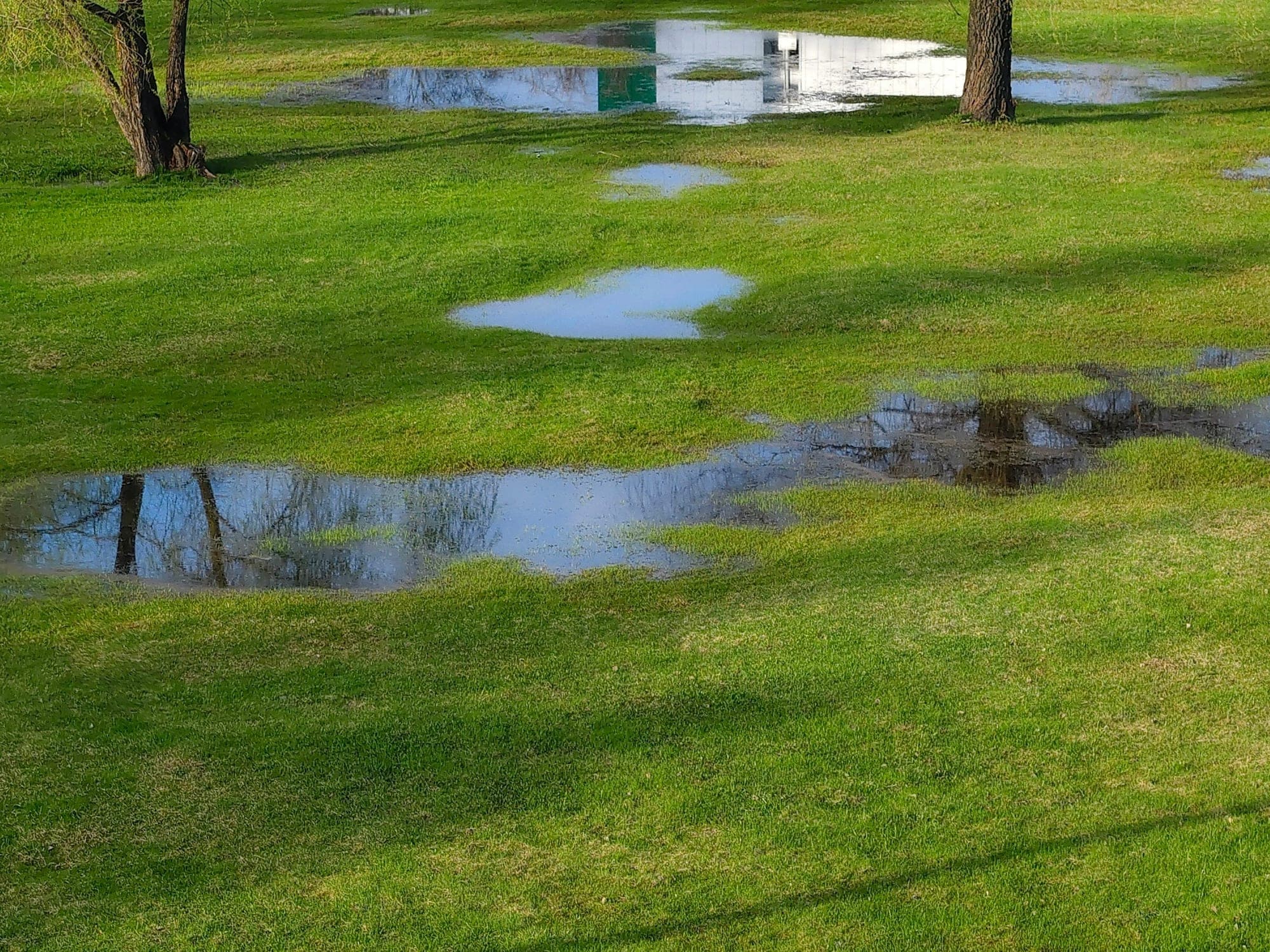
Rainfall gets the blame, but it is rarely the real cause. A waterlogged garden is about where that water cannot go next, whether that is compacted soil, a high water table or nowhere for roof and paving runoff to drain. No single fix works until you know which one you are dealing with, so this guide starts there.
Is it waterlogged, or just wet for a while in winter?
Waterlogging means water has filled the air spaces in the soil, so roots cannot get oxygen and start to die. The RHS says it does much less harm in cold winter soil, where roots and soil organisms use little oxygen, and far more in the warm months. Duration matters: the RHS says few plants survive long spells of waterlogging, especially in summer.
So a puddle in January is not an emergency. A border that is still soggy in May is. The RHS lists wilting even though the soil is wet, yellowing leaves, shoot dieback and blue-black roots, sometimes with a sour smell, as signs of real waterlogging.
Why is the garden waterlogged?
The RHS points to poorly drained or compacted soil, a high water table, hard surfaces that send runoff onto a smaller area of soil, and overflowing drains.
- Clay. Clay drains slowly and holds water. The British Geological Survey describes London Clay as the most widespread of the Palaeogene deposits in the London region, mostly silty clay. River gravels also run through the region, so soil can differ sharply from one garden to the next, and what fixed a neighbour's lawn will not always fix yours.
- Compaction. The RHS names compacted or heavy clay soil as the usual cause of a waterlogged lawn, and advises avoiding walking on it while it is waterlogged.
- Runoff. The RHS says non-porous materials in hard landscaping can increase rainwater runoff by as much as 50%, so a patio or driveway laid without a thought for where the rain goes is often the real culprit, not an unusually wet year.
- Drains. If drains outside your garden are the cause, contact your water company, says the RHS.
How can you test the drainage?
The RHS pit test takes one evening and a day. Dig a straight-sided pit about 60 cm (2 ft) deep, cover it to keep rain out and leave it overnight.
- Water in the pit by morning: there is a high water table.
- Pit dry: fill it with water, cover it, and check after 24 hours. Water still there means poor drainage.
If darker topsoil sits on thick, impermeable clay, the RHS says deep digging will not help and raised beds may be needed. A hard layer within the top 50 cm, where most roots live, is worth loosening.
What quick fixes are worth trying?
Start with the least invasive measures:
- Keep off wet soil. The RHS says clay worked or walked on when wet loses its structure and recovery is slow.
- Add bulky organic matter. About one barrow load per square metre is the RHS figure for a noticeable effect. It breaks clay into crumbs.
- Do not add sand or grit to clay. The RHS says this is seldom effective: roughly 250 kg per square metre for a 40% clay soil, and it can make the soil harder to work.
- Plant high. Trees and shrubs can go on shallow raised mounds, and many plants do well in raised beds. When you plant, break up the base of the hole and loosen its sides with a fork.
- Spike a waterlogged lawn. Wait for standing water to drain, then push a fork in 10 to 15 cm (4 to 6 in) deep, or use a hollow-tined aerator, and brush in a free-draining top dressing. The RHS says late autumn and winter suit this best.
Organic matter and aeration improve soil structure, but they will not cure a high water table.
When does drainage work make sense?
Drainage work is wasted money unless water has somewhere to go afterwards, such as a ditch, drain or soakaway, according to the RHS. If it does not, the RHS suggests stripping the turf, digging in plenty of organic matter, adding 5 cm (2 in) of sharp sand, and re-laying the lawn.
A soakaway needs ground that can drain, and it is not a given on clay. Stratford-on-Avon District Council's technical guidance says a soakaway should not be within 5 m of a building or road or 2.5 m of a boundary, nor where the water table reaches the bottom of it at any time of year. It describes a percolation test, which fills a trial hole with water and times how fast it falls, and says not to run it during heavy rain, severe frost or drought. Check with your local building control before digging near the house.
If the problem is roof water, the RHS suggests a rain garden, about 20% of the roof area, on ground that drains at least 1.25 cm an hour. Heavy clay or a high water table may rule that out. Within 5 m of the house, the RHS advises taking advice from a geotechnical adviser or registered ground engineering professional.
Permeable surfaces help too. If you are paving a front garden in England, the Planning Portal says a traditional impermeable driveway over 5 square metres needs planning permission, unless the rainwater drains to a lawn, border or other permeable area.
Which plants cope with wet soil?
Few plants tolerate prolonged waterlogging. The RHS says the plants on its wet-soil list are only "more tolerant than most", and that permanently wet and seasonally wet soil call for different choices. Plants it names include dogwood (Cornus alba), weigela, mophead hydrangeas, hostas, astilbes and Iris ensata. If the water table is high, a bog garden suits the spot better than fighting it.
Drought-tolerant Mediterranean plants are poor choices here, however well they suit a dry front garden elsewhere. The RHS says they dislike waterlogging, and root rots like Phytophthora are more common in wet soil. Our guide to what grows well in clay soil covers plants for clay in more detail.
When should you call a professional?
Get a drainage survey, or advice from a ground engineer, if the pit fills with water, if water is within 5 m of the house, or if the garden floods repeatedly. Guessing at drainage work this close to a house is a false saving if it goes wrong. The RHS lists artificial drainage as an option for a high water table, which is where professional advice earns its cost. A professional can say whether the ground can take a soakaway.
For planting, soil improvement and tidying a wet border, our garden maintenance and soft landscaping services can help once the water side is sorted. We do not promise a drained garden, because the water table and the soil decide that. You can ask for a free visit.
Sources
- RHS: Gardening on wet soils
- RHS: Waterlogging and flooding
- RHS: Waterlogged lawns
- RHS: Clay soils
- RHS: Plants for wet soils
- RHS: How to choose plants for seasonally wet and dry soils
- RHS: Rain gardens
- RHS: Front gardens, permeable paving
- Planning Portal: Paving your front garden
- Stratford-on-Avon District Council: Percolation testing
- British Geological Survey: London Atlas, geology
This article sets out Aspen Rose's own reading of the RHS and other guidance above, useful background on why a garden stays wet, not professional advice for your particular soil or site. Every garden is different, so if in doubt, get a free, no-obligation quote and we'll take a proper look.
Waterlogged garden questions
Are water butts any use against waterlogging?
A little. The RHS says water butts reduce runoff from roofs, provided there is space in them to collect rain, and the stored water can be used in dry spells. They do not fix poor soil drainage.
Is it better to dig wet soil to loosen it?
No. The RHS says clay worked or walked on when wet becomes puddled and compacted, and that repairing the damage is slow. Wait until it has dried, or use raised beds and mulch so you do not need to dig.
What should I do after the garden has flooded?
Identify the source, wash down hard surfaces, clear debris from drains and keep off the soil until it is workable. The RHS also suggests removing damaged shoots, mulching over the roots and watering in dry spells, as waterlogged plants are more prone to drought stress.
Related services
- Garden MaintenanceRegular garden maintenance across London and Hertfordshire — mowing, pruning, weeding and seasonal care from an experienced team. Get a free quote.
- Soft LandscapingSoft landscaping and planting design across London and Hertfordshire — turfing, planting schemes and natural features from Aspen Rose. Get a free quote.
More from the blog
All articles →


Want a hand with your garden?
Tell us what you have in mind and we'll arrange a free, no-obligation visit and quote.
Free, no-obligation visit · Mon – Fri: 9:00 – 18:30