
Seasonal care
April Is a Gamble Between Sowing the Lawn Now and Waiting Out One More Frost
April is when a London lawn can be sown or repaired and beds can be mulched, while late frosts can still catch new growth. A prioritised list, with what is safe outdoors and what should wait.
By the Aspen Rose team6 min read
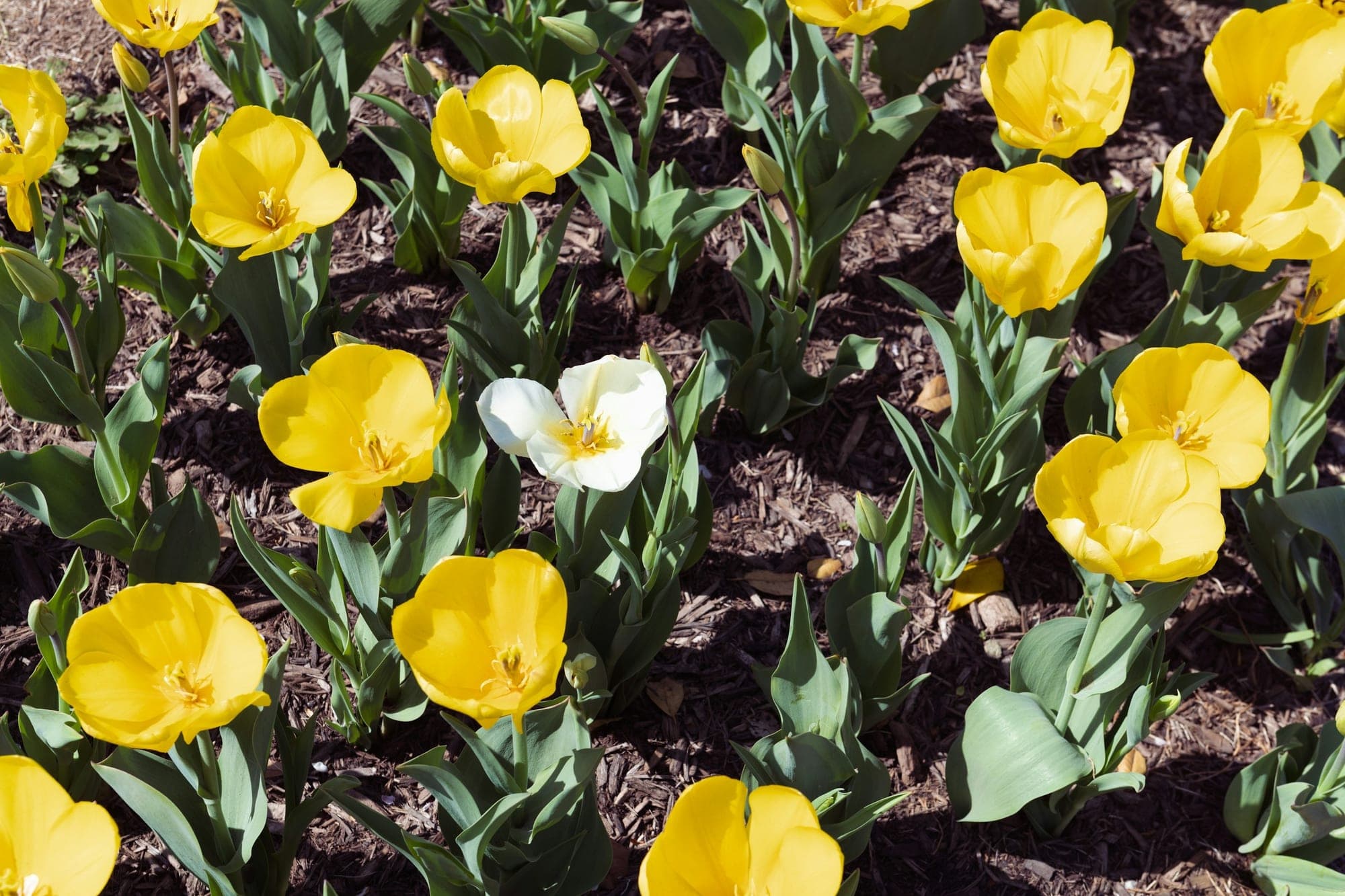
April's main decision is how much to trust the warmth, and the lawn and the tender plants deserve different answers. Sowing and mulching can go ahead on the usual timetable. Tender plants are the actual gamble: plant them out on the first mild afternoon and a late ground frost can undo the work in a single night.
How much frost is left in April?
Little, but not none, and that last fraction is what catches people out. At Heathrow the Met Office's 1991 to 2020 averages show April with a daytime high of 15.0°C, a night-time low of 6.0°C and 0.8 days of air frost. Rain averages 42.3 mm over about 8.8 days.
The RHS separates two things. The last air frost, a night at or below about 0°C, is not the date to plant tender plants. It says planting out usually comes two to four weeks after that, and that ground frost on clear, calm nights can still harm plants after the last air frost. The RHS also says to protect fruit blossom from a late frost. Heathrow is in west London, so an Enfield garden will vary a little.
What is safe outdoors in April, and what should wait?
| Safe outdoors | Wait |
|---|---|
| Hardy annuals sown in mild areas on light soil, or in pots | Half-hardy bedding such as petunias and marigolds, which the RHS says need reliably warm days and nights |
| Hardy herbaceous perennials such as geraniums, astrantias and Oriental poppies | Hanging baskets, except at the very end of the month in mild areas |
| Summer-flowering bulbs, in soil prepared for drainage | Large container-grown trees and shrubs, which may struggle as the weather warms and dries |
| Autumn-sown sweet peas, tied to supports | Tender plants in general: see how to protect plants from frost |
For large trees and shrubs the RHS says to consider waiting until October. Evergreens can be moved in cooler areas early in April if the soil is neither waterlogged nor dry.
When should you sow lawn seed?
From mid-April to early May, and this window is worth protecting in the diary rather than fitting in whenever is convenient. The RHS says to prepare the ground by forking, weeding, levelling and lightly firming it, and not to sow into very wet or cold soil because germination will be poor. If you miss early May, the RHS says to wait for September.
Keep off new grass until it is 5 to 8 cm tall, then give it a light trim with the blades on their highest setting. For overseeding an existing lawn rather than starting a new one, see when to overseed a lawn.
Established lawns need little in April. The RHS says most lawns do not need feeding, and that organic spring lawn fertiliser is the choice if yours does. It suggests a spring-tined rake to remove old plant debris and moss. For a lawn managed for wildlife, mowing about every two weeks lets dandelions, clover and daisies flower. Wait at least six weeks after flowering before mowing bulb areas.
Why mulch in April?
Mulch holds moisture before summer and suppresses weeds that are about to germinate. The RHS says to spread it in mid to late spring, before annual weeds sprout, after weeding and when the soil is moist. For rose and shrub beds it suggests 5 to 8 cm of organic matter, starting with rhododendrons, azaleas and camellias, which flower poorly if they dry out in late summer. Keep mulch away from the stems of woody plants.
Our mulching of flowerbeds service covers this, and how to mulch flower beds explains the choices if you would rather do it yourself.
What pruning belongs in April?
Early April is the time to cut willow and dogwood grown for winter stems back hard, and to stool smoke bush and elder, according to the RHS. Lavender, helichrysum and santolina can be lightly cut back to stop them going woody. Forsythia and Chaenomeles wait until after flowering, and the RHS says to remove frost-damaged shoots from evergreens now.
The nesting season is under way, so a hedge cut needs the same checks as in March. The RHS April page gives no hedge pruning advice, and the RSPB recommends cutting hedges between September and February. When to trim a hedge has the details.
What does April mean for wildlife?
Hedgehog Street says hedgehogs spend April regaining the energy they lost over winter, so check long grass, leaf piles and compost before strimming or forking, and avoid slug pellets. The RHS also says to tolerate caterpillars and aphids where you can, because they feed young birds. Hoe weeds as they appear, and keep shielding new shoots from slugs and snails.
The months either side
Last month is in March, and May covers planting out once the frost risk ends.
Sources
- Met Office: Heathrow location-specific long-term averages, 1991 to 2020
- RHS: April jobs
- RHS: April lawns
- RHS: April trees and shrubs
- RHS: April flower garden
- RHS: May lawns
- RHS: When to plant out tender plants to avoid frosts
- RHS: Mulch
- RSPB: Birds' nests and nestboxes
- Hedgehog Street: April top tip
This reflects our own read of what matters most in a London or Hertfordshire garden in April, not a guaranteed task list for yours. Exactly how much frost risk is left where you are depends on your own site and the year you are having, so use this as a guide rather than a promise. Get in touch if you would like a hand with the sowing or the mulching.
April garden questions
What should you do with tulip and daffodil flowers after they fade?
Remove the faded flowers and any seed pods, but leave the stems and leaves in place, according to the RHS. The leaves feed the bulb for next year, so do not cut them down early, and keep the mower off the area for at least six weeks after flowering.
Can you plant a tree or hedge in April?
You can, but it is not the easiest month. The RHS says evergreens move best early in April in cooler areas, and that large plants may struggle as the weather warms and dries, so October is worth considering. Fit a stake and a rabbit guard when you plant.
Do pots and containers need watering in April?
Yes, check them. The RHS says containers can dry out even at this time of year. Top up pots with fresh peat-free compost, or replace the top 5 cm if there is little room, and pot on any plant that is pot-bound. Tip the root ball out of a struggling plant to see whether it is pot-bound.
Related services
- Garden MaintenanceRegular garden maintenance across London and Hertfordshire — mowing, pruning, weeding and seasonal care from an experienced team. Get a free quote.
- Mulching of FlowerbedsProfessional flowerbed mulching across London and Hertfordshire — weed suppression, moisture retention and a neat, finished look. Get a free quote.
More from the blog
All articles →
Want a hand with your garden?
Tell us what you have in mind and we'll arrange a free, no-obligation visit and quote.
Free, no-obligation visit · Mon – Fri: 9:00 – 18:30