
Seasonal care
January's Only Real Gardening Job Is Deciding What Not to Touch Yet
In a London January the main jobs are protective ones: stay off frosty lawns and sodden beds, prune dormant trees and shrubs, keep ivy off gutters, clear slippery paths and feed the birds.
By the Aspen Rose team5 min read
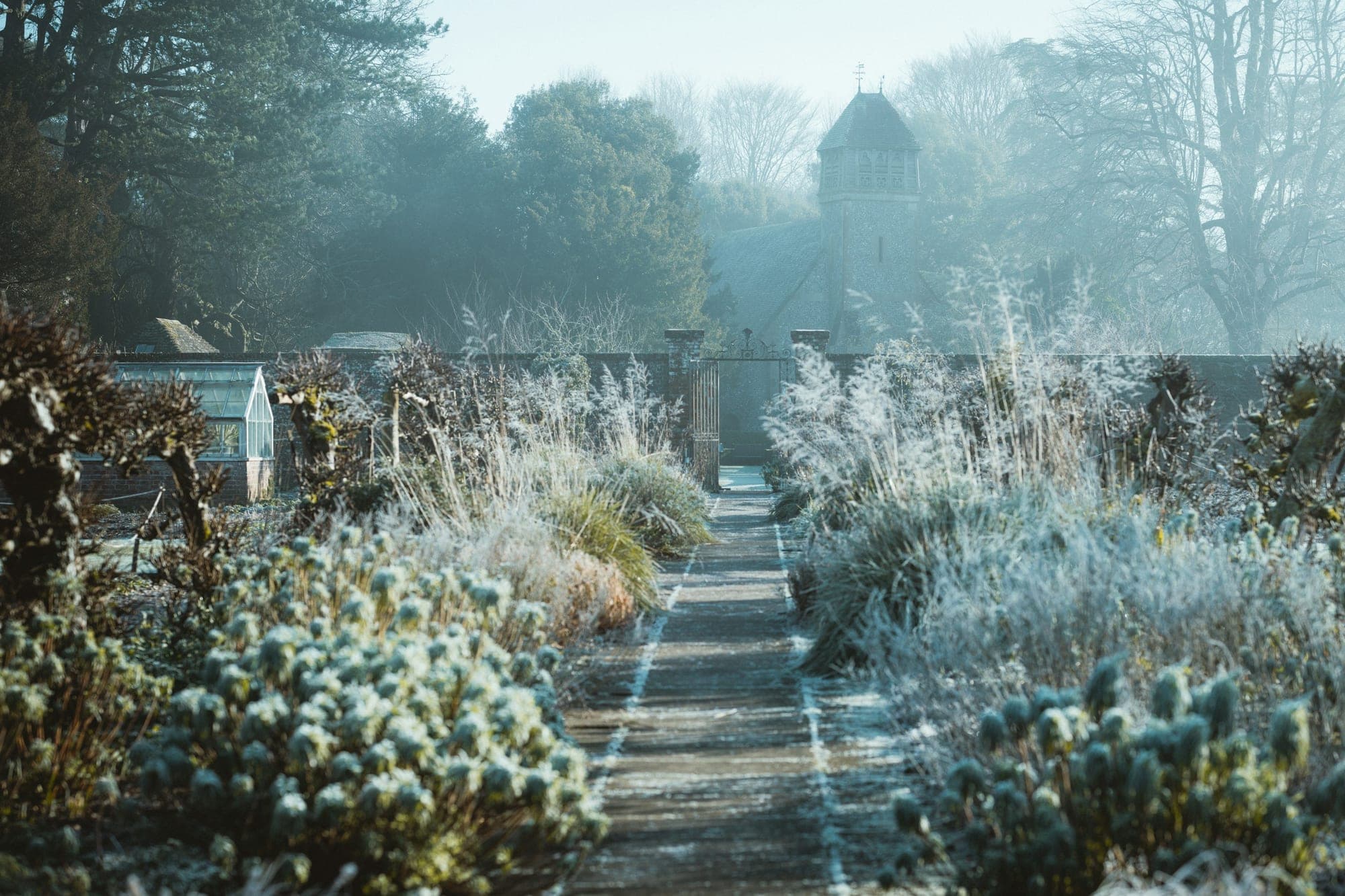
Very little grows in January, which is exactly why most of the damage gets done this month. People walk frozen grass, dig wet beds and start pruning that should wait, because the garden looks dormant enough to ignore. The list below puts the restraint first and the active jobs second, in the order that actually matters.
What is January like in a London garden?
At Heathrow, the Met Office's 1991 to 2020 averages give a January daytime high of 8.4°C and a night-time low of 2.7°C. There are 6.8 days of air frost (a night when the air temperature drops below 0°C) and 58.8 mm of rain, falling on about 11.5 days. Rainfall is higher than in any month from February to September.
Heathrow is in west London, so a garden in Enfield will differ a little, and a single year can look nothing like an average. The pattern still explains the month: soil is more often cold and wet than frozen solid, and both conditions punish the wrong job.
What matters most in January, in order
Skip the first two and every job after them gets harder: a bruised lawn takes weeks to recover, and dug-over wet clay compacts into something worse than before you touched it.
- Stay off the lawn when it is frosty. The RHS says frosted grass goes brittle, and footprints can stay brown for a few weeks. Wait for it to thaw.
- Keep off wet beds and heavy soil. Frozen or waterlogged ground is the wrong time to dig or move plants. The RHS says established deciduous trees and shrubs can be moved only when the ground is neither frozen nor waterlogged.
- Prune dormant deciduous trees and shrubs you can reach safely. The RHS suggests renovation pruning now for many deciduous trees, shrubs and hedges, including beech, hazel and hornbeam. Wisteria side-shoots shortened last summer can be cut to two or three buds, taking care to keep the flower buds. For large trees, the RHS suggests a tree surgeon.
- Cut ivy, Virginia creeper and Boston ivy back from windows, doors, gutters and roof tiles. The RHS lists this as a January pruning job.
- Deal with slippery paths and patios. The RHS says algae builds up most after wet winters and makes surfaces slippery, though it does not damage them. A stiff broom is the first tool, and the RHS also says to keep drains clear of leaves.
- Look after birds. Keep food and fresh water out, and leave some perennials and grasses standing until later in winter for cover.
What can wait until later?
A few jobs feel overdue in January. They are not, and doing them now causes the exact problems this list is trying to prevent:
- Lawn seed. The RHS says it is too cold to sow, so wait for spring. Turf can be laid in mild weather.
- Hydrangeas. The RHS says wait until March, because old flowerheads help protect the shoots from frost.
- Evergreens, tender plants and ornamental cherries or plums. The RHS says to leave them until spring, and pruning Prunus in autumn or winter risks silver leaf disease.
- Cutting back every perennial. The RHS says you can start on grasses and perennials kept for winter interest, or wait a few more months to give wildlife cover.
Which lawn jobs are worth doing now?
Only the gentle ones, and only on mild days. The RHS suggests spiking a waterlogged lawn with a fork and brushing in a mix of sharp sand and loam, re-cutting the edges with a half-moon iron, and filling bare patches with spare turf. Worm casts can be brushed off with a hard broom once dry, though the RHS notes they show healthy soil.
Moss and algae often point to shade or poor drainage, so how to fix a waterlogged garden is the more useful read than a quick treatment.
Where do we fit in?
Gutters, paths and pruning at height are jobs some people would rather hand over. Our jet wash and gutter clearing service and garden maintenance cover them, and the green waste is taken away and disposed of properly at recycling centres. The free visit comes with a written quote.
The months either side
If you are planning the year, December covers the lead-up, and February is when the nesting deadline for hedges starts to matter.
Sources
- Met Office: Heathrow location-specific long-term averages, 1991 to 2020
- RHS: January jobs
- RHS: January lawns
- RHS: January trees and shrubs
- RHS: January flower garden
- RHS: February flower garden
- RHS: Algae, lichens, liverworts and moss on hard surfaces
- RSPB: Birds' nests and nestboxes
This reflects our own read of what matters most in a London or Hertfordshire garden in January, not a guaranteed task list for yours. Frost, rainfall and ground conditions shift from one year and one garden to the next, so treat the order above as a starting point rather than a script. Get in touch if you would rather hand over the cold, wet jobs.
January garden questions
Can you plant in the garden in January?
Yes, in the right conditions. The RHS says bare-root deciduous trees and hedging can still go in, with the stake fitted before the rootball. Established plants should be moved only when the ground is neither frozen nor waterlogged. Roses can be planted, but not where roses grew before, because of replant disease.
What should you do with a real Christmas tree?
The RHS suggests shredding it and using the pieces as mulch. Take off any decorations, tinsel and netting first. If you have no shredder, check whether your council collects trees.
Is it worth lifting and dividing perennials in January?
Only in a mild spell or a dry one. The RHS says you can still lift and divide herbaceous perennials then, which increases stock and revives tired clumps that flower poorly. Avoid frozen or waterlogged ground.
Related services
- Garden MaintenanceRegular garden maintenance across London and Hertfordshire — mowing, pruning, weeding and seasonal care from an experienced team. Get a free quote.
- Jet Wash & Gutter ClearingJet washing and gutter clearing across London and Hertfordshire — protect your property from water damage and slip hazards. Get a free quote.
More from the blog
All articles →
Want a hand with your garden?
Tell us what you have in mind and we'll arrange a free, no-obligation visit and quote.
Free, no-obligation visit · Mon – Fri: 9:00 – 18:30