
Lawns
A Brown Lawn in a Heatwave Usually Isn't Dying. It's Doing Exactly What It's Supposed To.
In a heatwave, the best protection for an established lawn is to mow higher and less often, leave short clippings and keep off it. Watering is for new lawns.
By the Aspen Rose team6 min read
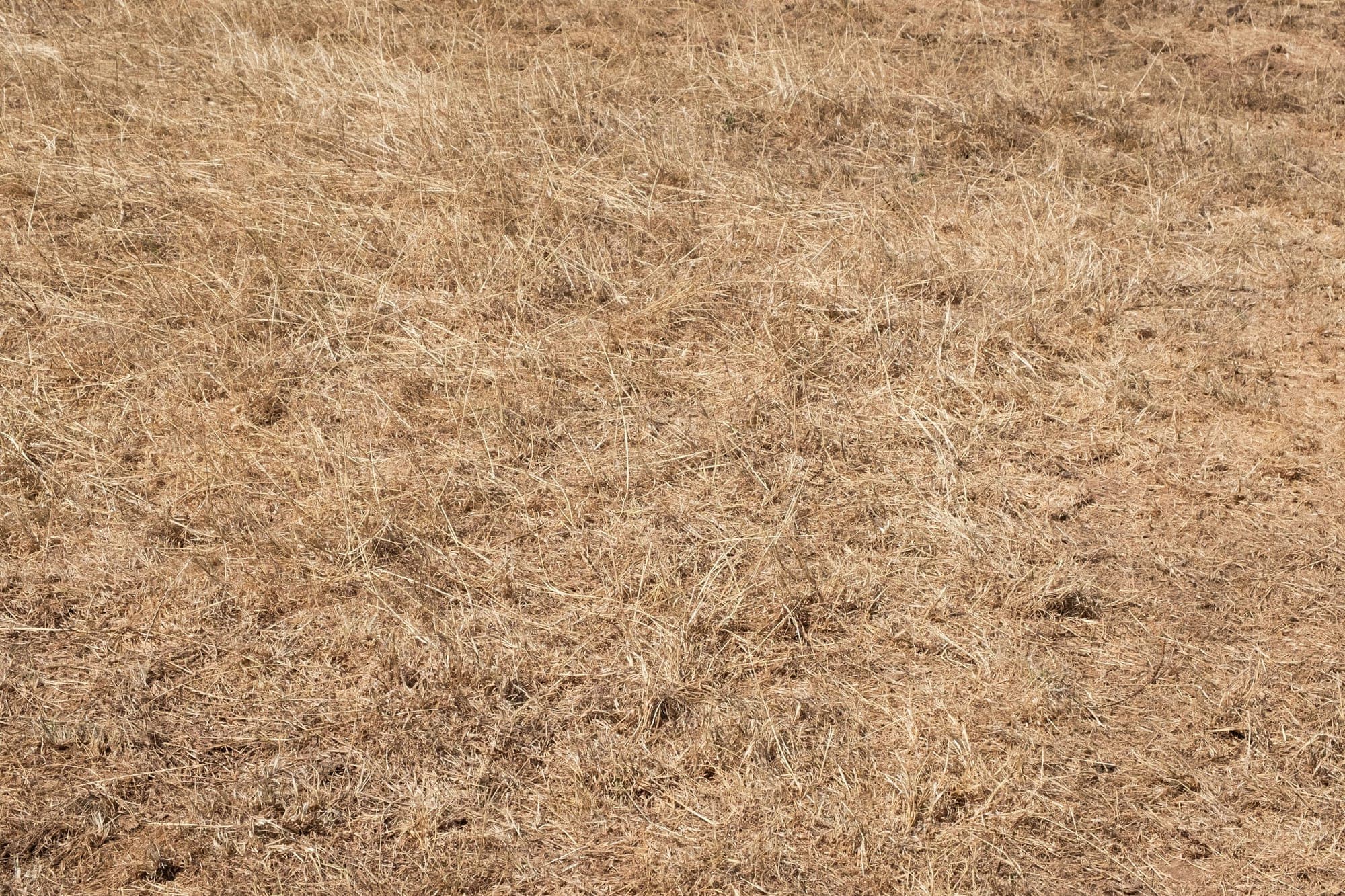
A heatwave looks like it's killing the lawn. It almost never is. Brown blades usually mean the top growth has shut down for self-preservation while the roots sit underground, alive and waiting for rain.
The habits that actually help are short and simple. The thing that hurts is the instinct to fight the browning at any cost, which is exactly the wrong response.
What counts as a heatwave in London and Hertfordshire?
The Met Office defines a UK heatwave as at least three consecutive days with a daily maximum at or above a threshold for that area. The threshold is 28°C for London and the Home Counties, and 25°C for much of northern and western Britain. Hertfordshire's threshold was raised from 27°C to 28°C in 2022.
A heatwave is a temperature measure. It says nothing about rain, which is what a lawn is really short of.
Should you water your lawn in a heatwave?
Not an established lawn, however strong the urge to reach for the hose. The RHS says to resist watering one through the summer, however brown it gets, because the underlying roots are alive and the grass regrows when rain returns. It adds that watering a parched lawn wastes mains water for a result that would have arrived on its own.
Some lawns are different:
- New turf or seed. The RHS says these need regular watering in dry weather until established, and Turf Online warns that unwatered turf can die within 48 to 72 hours in hot weather.
- A small lawn you want to keep green. The RHS recommends stored rainwater or grey water, such as washing-up water, in preference to mains water where possible.
- Dry patch. If a brown area turns out to be dry patch, the RHS says to spike it densely and water lightly each day for a few days.
If a temporary use ban is in force, hosepipes and sprinklers are off the table. Our article on watering during a hosepipe ban covers what you can still do, including the exemption for new turf laid by a business.
What should you do to protect the lawn?
Three habits do most of the work, and the RHS recommends each of them.
- Mow less often, and raise the blades. Growth slows in dry weather. The RHS says longer grass encourages deeper rooting, and close cutting in dry weather weakens the lawn. Our guide to how short to cut your lawn gives the heights.
- Stop mowing if growth stops. The RHS says to take a break when the grass stops growing.
- Leave the clippings, if they are fine. The RHS says that in very dry weather clippings under 1cm can stay on the lawn to help hold in moisture. Larger clippings can smother the grass.
What should you stop doing?
Stopping matters as much as anything you start doing. Do not feed or spray a lawn in the heat. The RHS says not to put weedkiller or fertiliser on drought-stressed turf, even in autumn, and to wait until spring. Purdue University's turf team, whose advice is for American lawns, says there is no need to push leaf growth when water is short, so treat the detail as a guide.
Walking on a stressed lawn is the other one to avoid. Purdue says intense traffic that damages the crowns of drought-stressed grass can stop it recovering. Keep foot and wheel traffic light until the lawn has recovered.
How can you tell heat browning from something else?
Heat browning shows first where the soil is driest. The RHS says irregular brown patches in dry weather are most likely where tree roots run under the lawn or where sandy soil drains quickly.
The RHS lists several look-alikes: fertiliser or weedkiller overdose, scalping from mowing too low, spilt fuel or oil, leatherjackets and chafer grubs, dog urine and fungal disease, as well as dry patch. A patch that does not green up after rain is worth a closer look.
What happens after the heatwave?
Recovery is the next step, and it is a separate job. The RHS says the autumn after a dry summer is the ideal time to renovate: re-sow sparse areas, ideally with a drought-tolerant mix, and leave weedkiller and feed until spring. Our article on whether your lawn is dead or just dormant shows how to tell the difference.
If you would like help with a lawn that has suffered, we offer a free, no-obligation visit through our garden maintenance service.
Sources
- Met Office: Heatwave threshold changes (2022)
- Met Office: UK heatwave likely (2025)
- RHS: Lawn care for drought conditions
- RHS: How to mow a lawn
- RHS: Lawns in August
- RHS: Lawns, dry patch problems and fixes
- RHS: Lawns, dead patches and fixes
- Turf Online: How long do I need to water my turf after it is installed?
- Homebuilding: Mowing a lawn in a heatwave
- Thames Water: Temporary hosepipe ban notice
- Purdue University: My lawn is brown and crunchy, is it dead?
This reflects what tends to work on lawns in London and Hertfordshire's climate and soils, not a guarantee for yours. Every lawn is different, so treat this as a starting point. Get in touch if you'd like us to take a proper look at what's actually going on in yours.
Lawn heatwave questions
Is a heatwave the same as a drought?
No. The Met Office defines a heatwave by temperature alone: at least three consecutive days above a local threshold. A drought is a shortage of rain and water. A hosepipe ban is a separate decision, made by a water company for the customers it supplies, which is why a hot week does not always mean a ban.
Should I reseed bare patches during a heatwave?
Wait. The RHS says to repair bare patches in spring or autumn, and calls the autumn after a dry summer the ideal time. New seed or turf needs regular watering, which may be hard to give in a heatwave, and hosepipes and sprinklers may not be allowed during a temporary use ban.
Will weeds and moss take over a browned lawn?
They can. The RHS says weeds and moss may appear when drought thins the grass, though they can also help keep the lawn green. Leave them until autumn, then repair and re-sow, and avoid weedkiller on drought-stressed turf until spring.
Related services
More from the blog
All articles →
Want a hand with your garden?
Tell us what you have in mind and we'll arrange a free, no-obligation visit and quote.
Free, no-obligation visit · Mon – Fri: 9:00 – 18:30