
Seasonal care
A Hosepipe Ban Doesn't Stop You Watering the Garden. It Stops the Hose.
Yes, by hand. A watering can, bucket, water butt or grey water is allowed, but a mains hosepipe or sprinkler is not. Exemptions are narrow, so check your own water company's notice.
By the Aspen Rose team6 min read
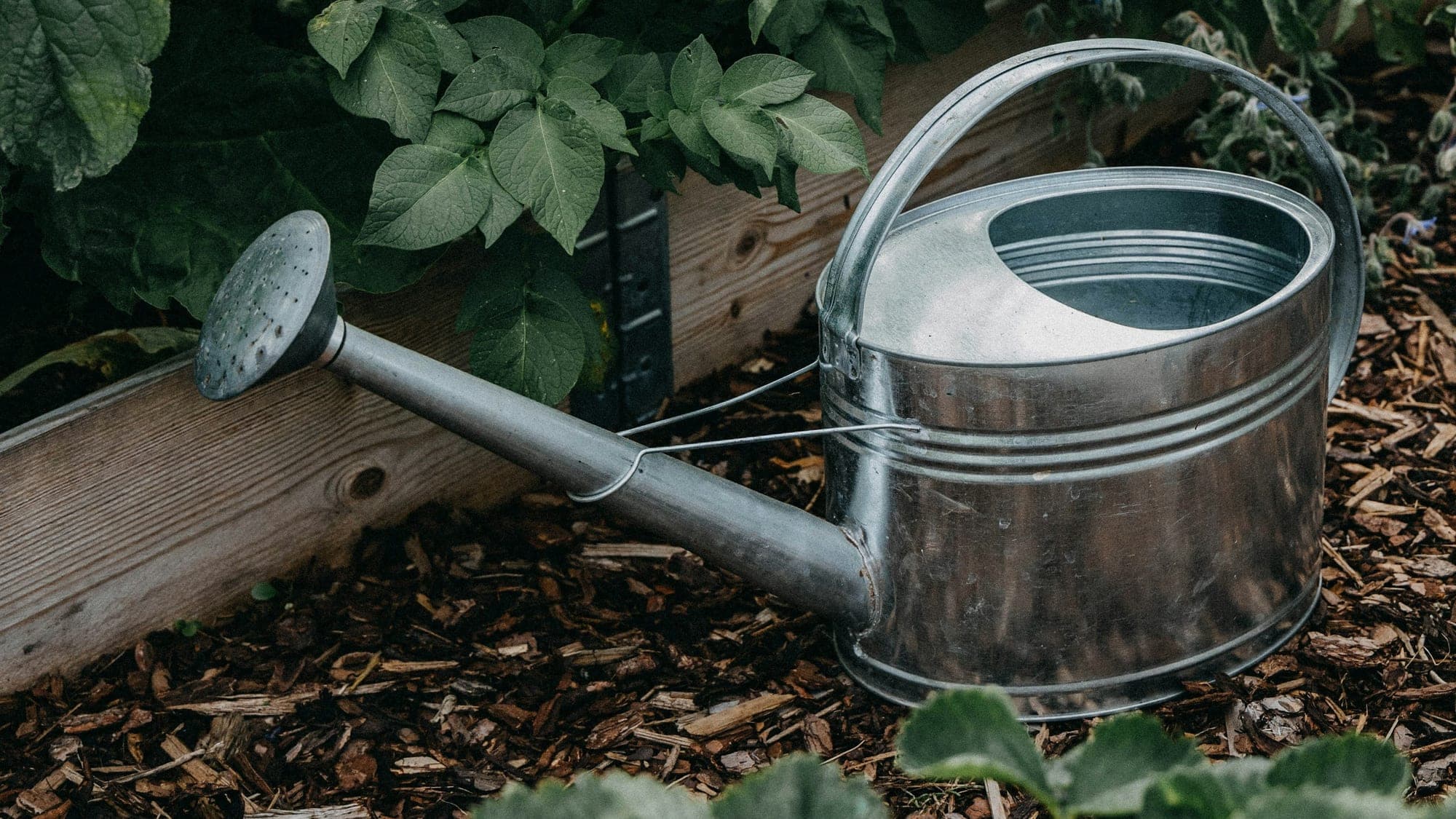
A hosepipe ban is the common name for a temporary use ban, which a water company can introduce for the customers it supplies under the Water Industry Act 1991, and the name itself causes most of the confusion. It bans a method, not the activity: watering plants by hand was never on the table.
This guide uses Thames Water's 2026 notice as a worked example, not a national rulebook. Thames Water introduced a ban in July 2026, but bans are lifted when conditions improve, so check your own supplier's page to see whether one still applies to you. Rules and exemptions change from one company and one notice to the next, and treating one supplier's notice as universal is the easiest way to get this wrong.
What does a hosepipe ban stop you doing?
A ban stops you using a hosepipe or sprinkler on mains water for a specific, listed set of purposes, not gardening in general. Thames Water's notice lists eleven, including:
- watering a garden, which covers lawns and allotments
- watering plants on domestic premises
- cleaning a car, and cleaning paths, patios, walls and windows
- filling or maintaining a paddling pool, swimming pool, pond or ornamental fountain
Its main page says that sprinklers and pressure washers are caught too, which rules out the two tools most people reach for first. That notice took effect at 00:01 on Thursday 23 July 2026 and was to continue until further notice. Thames Water said it would lift the restrictions as soon as conditions allow, and that sustained rainfall was needed first, so there was never a fixed end date to wait out.
What can you still use?
You can still water by hand, and this is the bit most people underestimate: it covers more of an ordinary garden's watering than they expect. Thames Water's notice says that buckets and watering cans are not covered by the prohibitions, and nor are greywater, rainwater from a water butt or water from a private borehole.
Its FAQs add that a short hose of up to 30cm can be used to fill a watering can, a small but genuinely useful allowance. They do not say whether a water butt filled from the mains tap counts as non-mains water, so do not assume either way; ask your supplier before you rely on it.
Grey water is reusable household water, such as from a bath or washing up, and it is worth using properly rather than as a last resort. The RHS says to use it within about a day, apply it with a watering can, and keep it off edible crops.
Which exemptions apply to gardens?
The exemptions are narrower than they look at first glance, and misreading them is the most common mistake we see. Here are the ones that matter most to a home gardener, from Thames Water's notice.
| Situation | What is allowed |
|---|---|
| New turf, new lawn or new planting | A hose for 28 days from laying, sowing or planting, but only when a business did the work as a service, and only on the new area |
| Newly planted trees and hedging | A hose on trees, whips, saplings and hedging planted within the last three years, where hand-watering or non-mains water is not practical |
| Food crops | A hose on food crops at home or on a private allotment, where a watering can is not reasonably practical |
| Drip or trickle irrigation | An approved system with a pressure-reducing valve and a timer, which is not hand-held and delivers water to the soil without spraying |
| Health and safety, and Priority Services Register customers | Exempt for the reasons given in the notice |
The turf rule is the one that trips people up most. It covers turf laid by a business for you, not turf you lay yourself, so a DIY lawn gets no exemption at all, which feels unfair but is exactly what the notice says. Other companies set different conditions again. The Turfgrass Growers Association, a trade body for turf growers, listed South East Water in October 2026 as limiting watering of new turf to outside peak hours, so check yours rather than assuming Thames Water's terms apply everywhere.
What is the penalty?
Thames Water's notice says that breaking a ban may be an offence, and that on summary conviction the fine can be up to £1,000, though in practice enforcement leans on education first. Thames Water's FAQs say it contacts repeat offenders to make sure they understand the rules, and asks people not to report neighbours or ring 999, since this is a civil matter, not an emergency.
How do you find out which rules apply to you?
Ask your water supplier, not the neighbour, the internet, or whichever company made headlines that week. A ban applies only to the customers of the company that issues it. Thames Water's FAQs link to a page for checking who your water supplier is, and say plainly that restrictions may vary between water companies.
How do you garden with less water?
Ration what you have rather than spreading it thin everywhere, because not every plant needs it equally. The RHS's holiday guide puts hanging baskets first, then containers and window boxes, potted vegetables, and newly planted trees, shrubs and perennials, and says established borders and mature shrubs can usually cope with short dry spells without help.
Our guide to protecting garden plants in a heatwave covers the order, watering depth and shading in full. On lawns, the RHS says to let them brown and recover after rain, which is the right call even though a brown lawn unsettles people; our dead or dormant lawn guide shows how to tell the two apart.
If you would like help managing a garden through a dry summer, we offer a free, no-obligation visit through our garden maintenance service.
Sources
- Thames Water: Temporary hosepipe ban
- Thames Water: Hosepipe ban FAQs
- Thames Water: Legal notice
- The Water Use (Temporary Bans) Order 2010
- RHS: Using grey water
- RHS: How to look after your garden on holiday
- Turfgrass Growers Association: Hosepipe bans and newly laid turf 2026
This article sets out Aspen Rose's own reading of Thames Water's 2026 notice, not legal advice. Every water company's rules, exemptions and dates differ and can change as conditions do, so check your own supplier's current notice before acting on anything here.
Hosepipe ban questions
Can I fill a paddling pool or pond during a ban?
Not with a hosepipe. Thames Water's notice includes both on the banned list, and says that filling or maintaining a domestic pool or an ornamental fountain is banned by any method. Its exemptions allow a pool to be filled by hand-held container from a tap, and cover pools and ponds that hold fish.
Can I reseed or lay turf myself during a ban?
You can, but you will need to water by can or from stored water, because the 28-day hose exemption only covers work done by a business. The RHS says autumn is the best time to repair a lawn, and that new grass should be watered with rainwater or grey water where possible.
How does a hosepipe ban end?
The company that introduced it ends it. Thames Water said it would lift its restrictions as soon as conditions allow, and that sustained rainfall was needed first. Until your supplier says otherwise, assume a ban that applies to you is still in force.
Related services
More from the blog
All articles →
Want a hand with your garden?
Tell us what you have in mind and we'll arrange a free, no-obligation visit and quote.
Free, no-obligation visit · Mon – Fri: 9:00 – 18:30