
Lawns
Mowing Through a Heatwave the Way You Mow in Spring Is How Lawns Actually Die
Only if the grass is still growing. In hot, dry weather the RHS says to mow less often, raise the blades and leave short clippings, and to skip a cut when growth stops.
By the Aspen Rose team5 min read
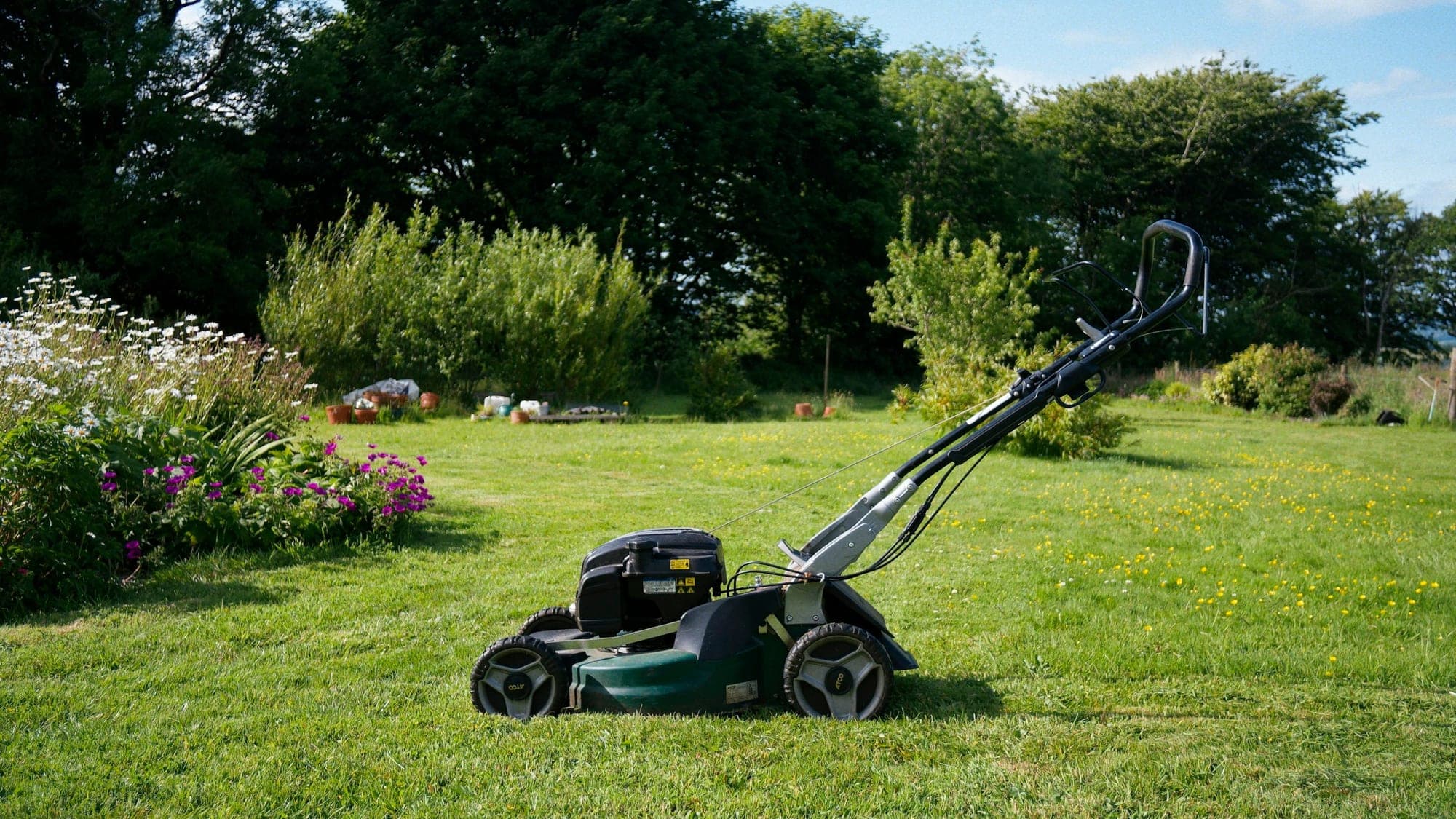
Treating a heatwave like any other week in the mowing calendar is the most common way people damage an otherwise healthy lawn. Grass that has stopped growing does not need cutting, and a close cut on grass that is already under stress weakens it further rather than tidying it up.
Should you mow when it is hot and dry?
Skip the cut once the lawn has stopped growing, which in a prolonged dry spell can mean weeks with the mower in the shed. The RHS says to mow less often in drought, and that cutting too close encourages shallow rooting, which makes the lawn more prone to drought damage rather than less. Its step-by-step guide is blunter still: mowing is not necessary during prolonged dry spells in summer.
The decision comes down to what the grass is actually doing, not what day of the week it is:
- Green and growing, grass dry: mow, with the blades raised.
- Pale or browning and not growing: leave it.
- Dormant and brown: wait for it to green up. Luke Newnes of Hillarys, quoted by Homebuilding, gives the same advice.
Homebuilding quotes Luke Newnes of Hillarys as advising against mowing above 30°C, while Chris Cooper of mower maker Hayter says there is no strict temperature cut-off. Neither figure comes from the RHS, so treat 30°C as a rule of thumb rather than a line in the sand.
How high should the blades be set in hot weather?
Higher than most people set them for the rest of summer. The RHS says longer grass encourages deeper rooting, and its advice in hot, dry spells is to raise the blades, not just leave them where they were. The one-third rule still applies underneath that: never remove more than a third of the grass height at once.
The numbers vary enough by source that it is worth checking before you buy a mower or trust a label.
| Source | Height |
|---|---|
| RHS, mowing guide (ordinary lawns, summer) | 13 to 25mm |
| RHS, how to mow a lawn | About 25mm in summer, about 40mm in spring and autumn |
| Experts quoted by Homebuilding (hot weather) | 5 to 7cm, or 6 to 8cm |
The RHS figures describe a normal summer and tell you to go higher still in drought. The Homebuilding figures are the opinions of garden-brand staff, and they are considerably taller. The sensible move is to take your usual summer setting and go up a notch or two, not to jump straight to 7cm on a lawn that has always been kept short. Our guide to how short to cut your lawn covers the height by season and use.
What time of day is best for mowing in hot weather?
Mid-morning, once the dew has gone, is one expert's recommendation, though the RHS itself gives no time of day, only that the grass should be dry so the blades cut cleanly. Guy Johnson of Johnsons Lawn Seed, quoted by Homebuilding, calls mid-morning ideal because the grass dries afterwards, and warns that mowing too early, while the grass is still damp, can damage it. He also says mowing in the early afternoon in warmer months can scorch the grass, which lines up with ordinary common sense about cutting anything under the midday sun.
Treat the specific hour as one expert's view rather than settled fact. Lucie Bradley of Easy Garden Irrigation, quoted in Homebuilding's heatwave article, says to wait until temperatures have cooled, which points the same direction: avoid the hottest part of the day, whichever hour that happens to be.
Should you leave the clippings on the lawn?
Yes, if they are short, and this is one of the few places hot-weather advice flips the usual rule. The RHS says clippings under 1cm can stay on the lawn in hot, dry weather, where they act as a mulch and hold in moisture rather than smothering anything. A mulching mower chops them finely and returns them straight to the soil. Longer clippings still need collecting, since they can smother the grass just as leaves would; add those to the compost between layers of woodier material.
What about a new lawn?
New lawns follow the same logic, with one addition. The RHS says to let a new lawn reach 5cm before its first cut, with the blades on the highest setting. In hot weather the same reasoning as for an established lawn applies on top of that, so there is little reason to cut a new lawn that is not growing either.
If you would like a hand keeping a lawn in shape through the summer, we offer a free, no-obligation visit through our garden maintenance service.
Sources
- RHS: Lawn mowing guide
- RHS: How to mow a lawn
- RHS: Lawn care for drought conditions
- RHS: Lawns in August
- Homebuilding: Mowing a lawn in a heatwave
- Homebuilding: Best time to mow a lawn
This reflects what tends to work on lawns through a London or Hertfordshire summer, not a guarantee for yours. Soil, grass type and how exposed a lawn is all change the picture, so treat this as a starting point — get in touch if you'd like us to take a proper look at what's actually going on in yours.
Hot weather mowing questions
Can I mow just after rain or watering?
Wait until the lawn has dried. The RHS says to mow when the grass is dry, because wet grass clogs the mower and mowing wet soil can compact it. Homebuilding suggests leaving a couple of days after heavy rain.
Is there a law about when I can mow?
Not in the UK, according to Homebuilding, which says there is no specific law on mowing times. Councils can act on noise above permitted levels between 11pm and 7am. Guy Johnson of Johnsons Lawn Seed, quoted in the same article, suggests mowing between 9am and 6pm, or later at weekends, to avoid irritating neighbours.
What should I do with long clippings?
Collect them. The RHS says to empty the box or rake up clippings regularly so clumps do not fall back and spoil the lawn, and notes that removing clippings can help prevent some fungal problems. Mix them into compost with woodier material.
Related services
More from the blog
All articles →
Want a hand with your garden?
Tell us what you have in mind and we'll arrange a free, no-obligation visit and quote.
Free, no-obligation visit · Mon – Fri: 9:00 – 18:30