
Seasonal care
Leaving Autumn Leaves on the Lawn Helps Wildlife and Can Quietly Smother the Grass Underneath
Rake leaves off the lawn, because a layer blocks light and moisture while the grass is still growing. Then put them to use in borders, under hedges and in a leafmould bin.
By the Aspen Rose team6 min read
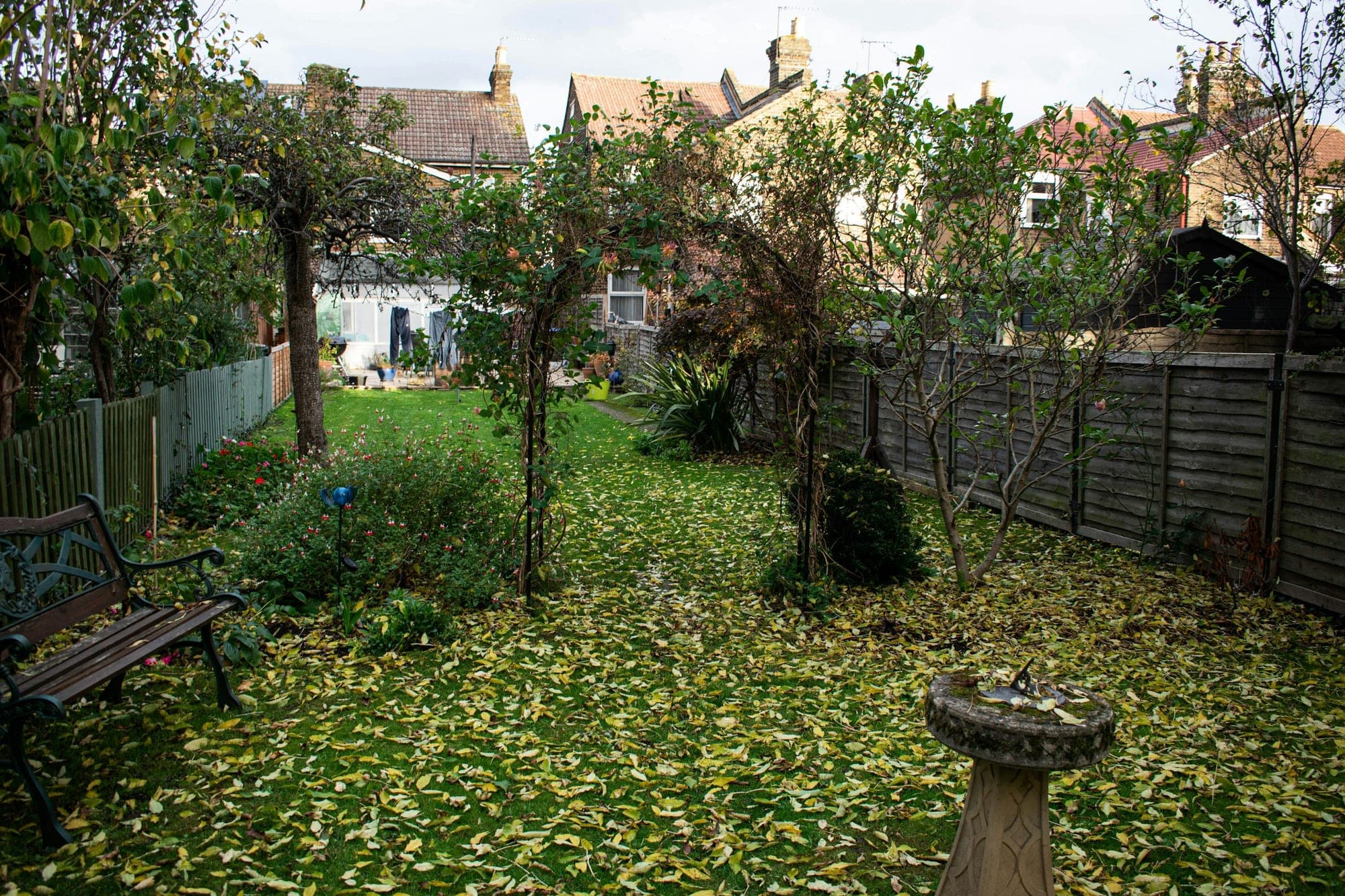
A lawn is the one part of the garden where a fallen leaf earns its removal. Everywhere else, leave it where it lands.
Why do fallen leaves harm a lawn?
Grass under a leaf mat is not dormant, so blocking its light and moisture is not a minor inconvenience. The RHS says a leaf layer smothers the grass, and its figure for when growth actually stops is above 7°C, which in a mild Enfield winter can mean weeks of continued growth hidden under wet leaves.
Not every brown patch is leaf damage, and it's worth checking before you assume it is. The RHS says fusarium patch, a fungal disease, is more likely in wet weather and on overfed lawns left too long between mows, and it produces similar yellowing. If patches are still there once the leaves are gone, the cause is more likely in how the lawn was fed or mown than in last month's leaf fall.
How often should you clear them?
There is no fixed interval, and chasing one misses the point. The RHS's October, November and December advice repeats the same instruction each month: rake leaves off the lawn so they do not smother it. Plantura, a commercial UK gardening site, puts a number on the risk window: about a week before thin cover starts causing real damage, with thick cover doing it faster.
The sensible rule is to let the lawn tell you, not the calendar. A few scattered leaves on a dry lawn can wait for a convenient afternoon. A layer that hides the grass cannot, whatever day it is. In a heavy fall, a weekly rake is about right, and a final clear-up by December is worth doing regardless.
- Rake. The RHS calls this the best option, and it is easy to see why: raking does not stress the grass the way mowing over it can.
- Mow. A rotary mower with a collecting box shreds the leaves and mixes in grass clippings, which the RHS says boosts the nutrients in the resulting leafmould. Collect the shredded pieces; leaving them on the grass, as Plantura points out, just restarts the problem you were solving.
- Blow. Quicker on a large lawn. See the FAQ below for which kind.
One condition overrides all three: keep off frosty grass. The RHS says it is brittle underfoot, and walking on it does more harm than the leaves would.
Where should the leaves go?
Everywhere that is not the lawn, leaves are an asset rather than a problem, which is the part of this question most people get backwards. The RHS says leaves in beds and borders can stay where they are, pushed to the back to rot down and provide habitat, and it advises against being too hasty clearing them from under hedges.
That reluctance matters for wildlife too. The RSPB suggests gathering dead wood and leaves into a corner pile, which shelters insects, small mammals and hedgehogs, and Yorkshire Wildlife Trust notes that birds forage through leaf litter for insects and seeds. A leaf layer that would ruin a lawn is exactly what a hedgehog is looking for in a border.
For the rest, make leafmould rather than binning it:
- Gather leaves on a dry day, and skip any from main roads because of pollution.
- Shred tough leaves first: the RHS names sycamore, walnut, horse chestnut and sweet chestnut. Holly, aucuba and cherry laurel are better suited to the compost heap.
- Fill a wire-mesh cage in a sheltered spot, or a bin bag with a few holes pierced in it. Moisten dry leaves and keep them damp throughout.
- Wait. The RHS puts most leaves at about two years to break down fully, with oak, beech and hornbeam making the best leafmould of the lot.
If you end up with more leaves than you can use, we take green waste away and dispose of it properly at recycling centres, as part of our garden maintenance and garden clearance services. For wider autumn jobs, see how to prepare your garden for winter.
What about paths, gutters and drains?
Paths and gutters do not get the same leniency as borders. Sweep leaves off paths and steps, because wet leaves are a genuine slip hazard, and keep gutters and drains clear while you are at it. Kingston council clears slippery, wet leaves from public roads and pavements, but not from private land, and it asks residents not to sweep leaves onto the public highway, instead using a garden waste bin, a recycling centre or their own compost.
Drains deserve the same attention as the lawn, not less. A 2016 Greater London Authority post advises checking gutters and downpipes, because leaves washed into drains slow drainage and raise the risk of surface water flooding. If you clear a roadside drain, do not add those leaves to your compost: the post warns that oil and chemicals may have washed onto them from the road. Report a blockage you cannot clear safely rather than leaving it.
Sources
- RHS: October lawns
- RHS: November lawns
- RHS: December lawns
- RHS: February lawns
- RHS: Leafmould
- RHS: How to deal with garden waste
- RHS: Wildlife in gardens
- RSPB: Autumn garden tips to help wildlife
- Yorkshire Wildlife Trust: Leaf it be
- Plantura: Fallen leaves on the lawn
- Royal Borough of Kingston: Grass cutting, leaf clearing and weeding
- Greater London Authority: Autumn leaves and flooding
This reflects what tends to work on lawns in London and Hertfordshire's climate and soils, not a guarantee for yours. Every garden sheds differently, so treat this as a starting point: get in touch if you'd like us to take a proper look at what's actually going on in yours.
Fallen leaf questions
Is a leaf blower a good idea?
On a large lawn it saves time, and the RHS says it makes the job easier. Battery models are quieter, greener and better for air quality than petrol ones. Either way, you still need to collect the leaves afterwards.
Can I use leaves as a mulch before they rot?
Leafmould that is poorer quality or under two years old can still be used as a mulch, the RHS says, so you need not wait for it to rot fully. Spread it at least 5 cm (2 in) deep between November and February, and keep it off the stems of trees and shrubs.
Can I put leaves in the garden waste bin?
Often, yes. Kingston, for example, accepts leaves in its garden waste bin, which needs a subscription. The RHS says many councils offer garden waste collection with an initial bin charge and an annual fee, and recycling centres have green waste areas. Check your council's rules.
Related services
- Garden MaintenanceRegular garden maintenance across London and Hertfordshire — mowing, pruning, weeding and seasonal care from an experienced team. Get a free quote.
- Garden ClearanceGarden clearance across London and Hertfordshire — overgrown beds, leaf buildup and site clearance handled quickly and tidily by Aspen Rose. Get a free quote.
More from the blog
All articles →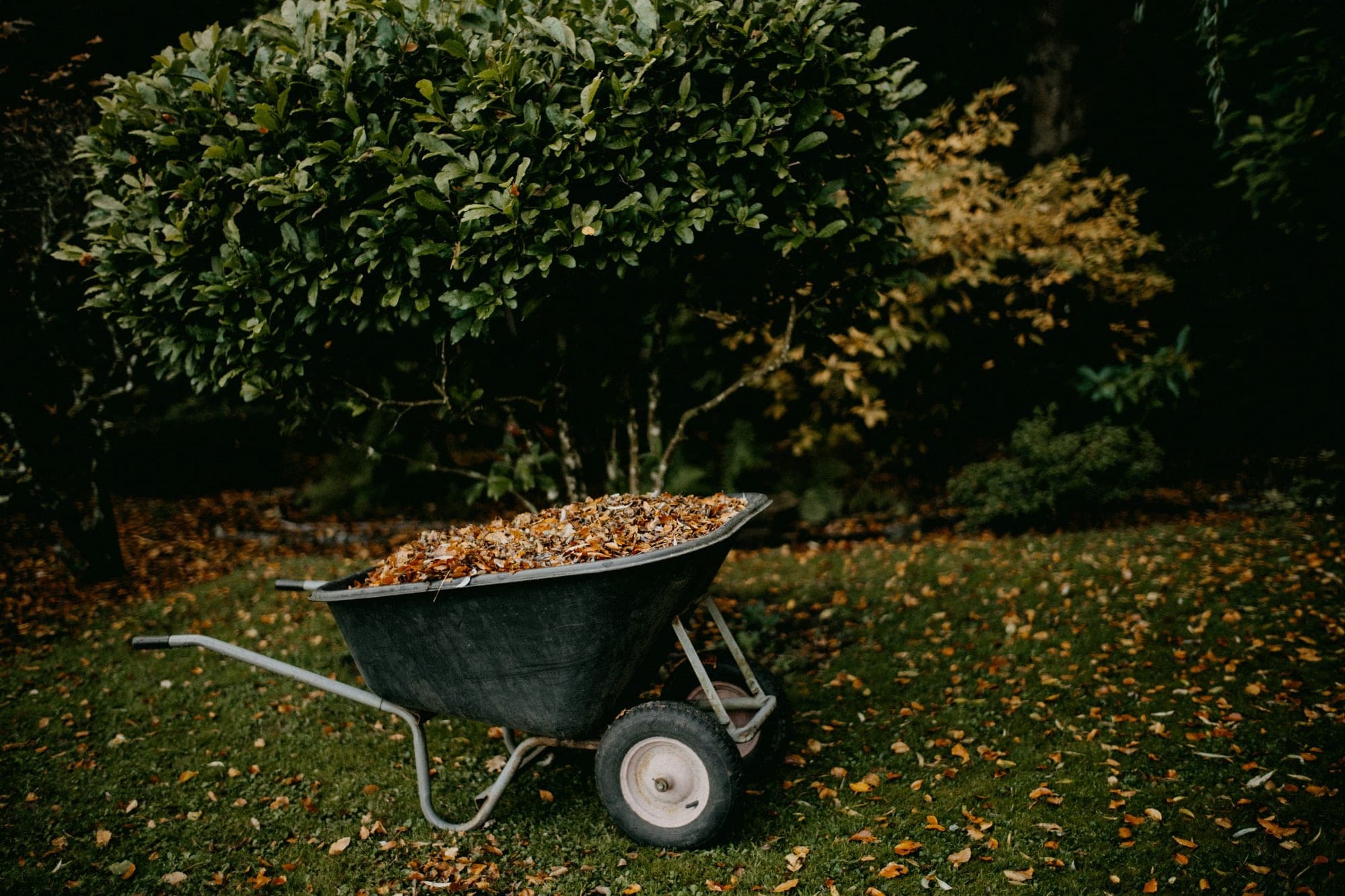
Want a hand with your garden?
Tell us what you have in mind and we'll arrange a free, no-obligation visit and quote.
Free, no-obligation visit · Mon – Fri: 9:00 – 18:30