
Garden problems
Jet-Washing Your Patio Can Do More Damage Than the Moss You're Trying to Remove
Sweep, then scrub with warm soapy water and a stiff brush. A pressure washer is a last step that depends on the surface, and in a hosepipe ban it may not be allowed at all.
By the Aspen Rose team6 min read
A pressure washer feels like the obvious tool, and it is the one most likely to cause the damage you are trying to avoid. A setting that is fine for porcelain can mark softer stone, and too much pressure on block paving strips out the jointing sand, turning a cleaning job into a repointing job.
Can you pressure wash a patio during a hosepipe ban?
Not in an area under a temporary use ban, and it costs nothing to check first. Thames Water's rules for a ban, for example, prohibit using a hosepipe, sprinkler or pressure washer to clean patios, driveways, paths, walls, windows or other outdoor surfaces. They do not stop you using a bucket and brush, which handles most patios well on its own. Check your own water company's page to see whether a ban is in force, and what it covers, before you start.
What is your patio made of?
Identify the surface before you reach for anything, because the wrong method is usually the cause of the problem you are trying to fix. Manufacturers' guidance differs by material:
| Surface | Start with | Pressure washer | Avoid |
|---|---|---|---|
| Porcelain | Sweep, then a pH-neutral cleaner or household detergent in water | Acceptable with care | Vinegar and bleach |
| Indian sandstone | Warm soapy water and a stiff brush | Low setting, test one spot, angle diagonally across the slabs | Acid-based cleaners |
| Limestone and slate | A pH-neutral cleaner and a stiff brush | Low pressure, jet kept out of the joints | Vinegar and bleach |
| Block paving | Warm soapy water | Medium pressure at about 30 degrees, then top up the joint sand | Chemical cleaners on clay blocks |
The sources are Marshalls for sandstone and block paving, and Mandarin Stone for porcelain and natural stone. If you do not know what you have, test the gentlest method in a corner first.
How do you clean a patio step by step?
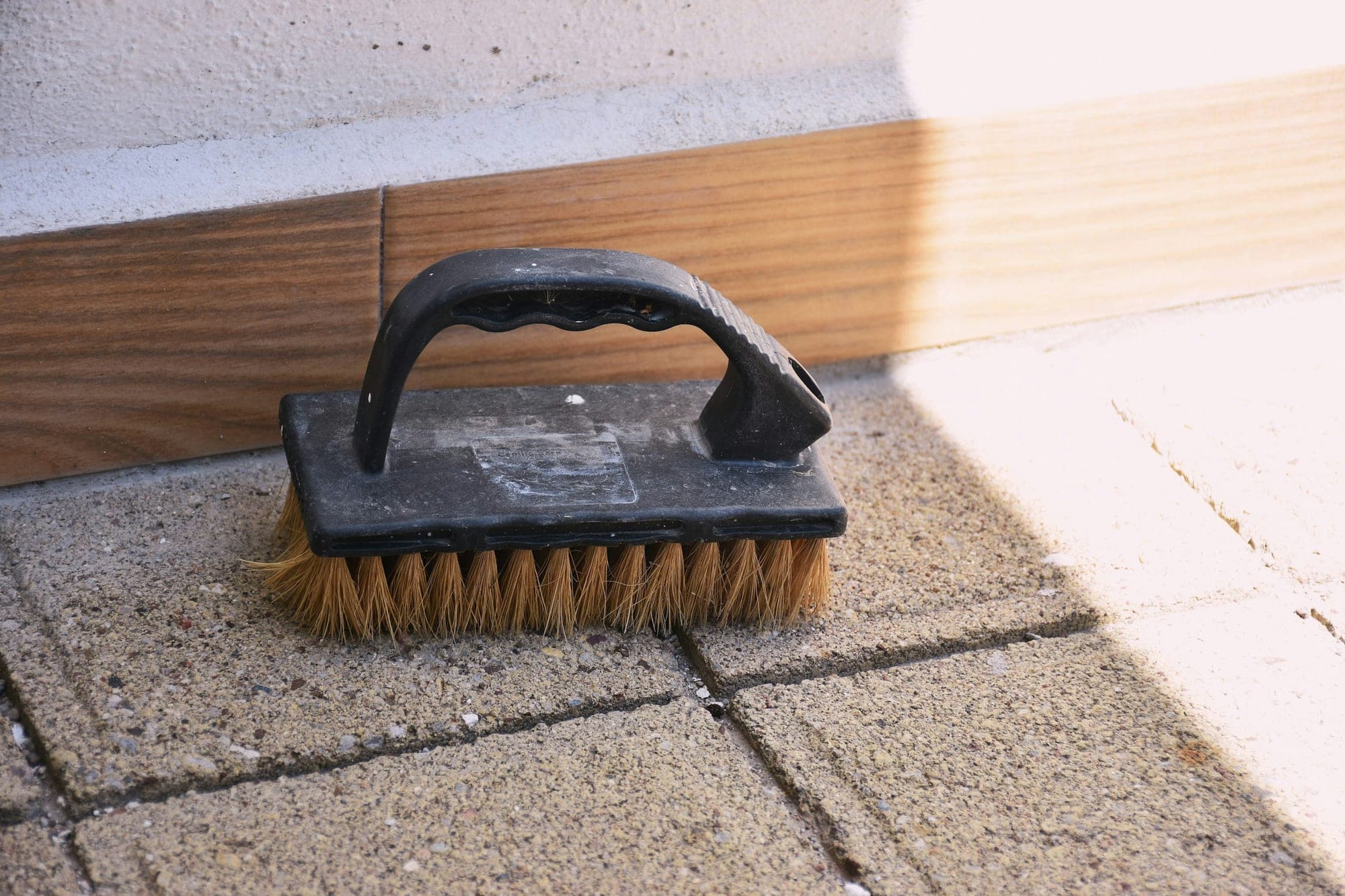
- Sweep it. Marshalls recommends regular brushing with a stiff outdoor brush so dirt does not become ingrained.
- Scrub with warm soapy water. Work one section at a time so the water does not run into the borders, scrub firmly and rinse with clean water.
- Let it dry before judging the result. Marshalls says some stones change colour when wet, and drying can take under an hour in summer or overnight in cooler weather.
- Pressure wash only as a last resort, if it is still dirty. Marshalls suggests holding the nozzle 30 to 50cm from the surface and moving slowly across each slab.
- Refill the joints on block paving. Marshalls says washing can displace jointing sand, and recommends brushing in kiln-dried sand.
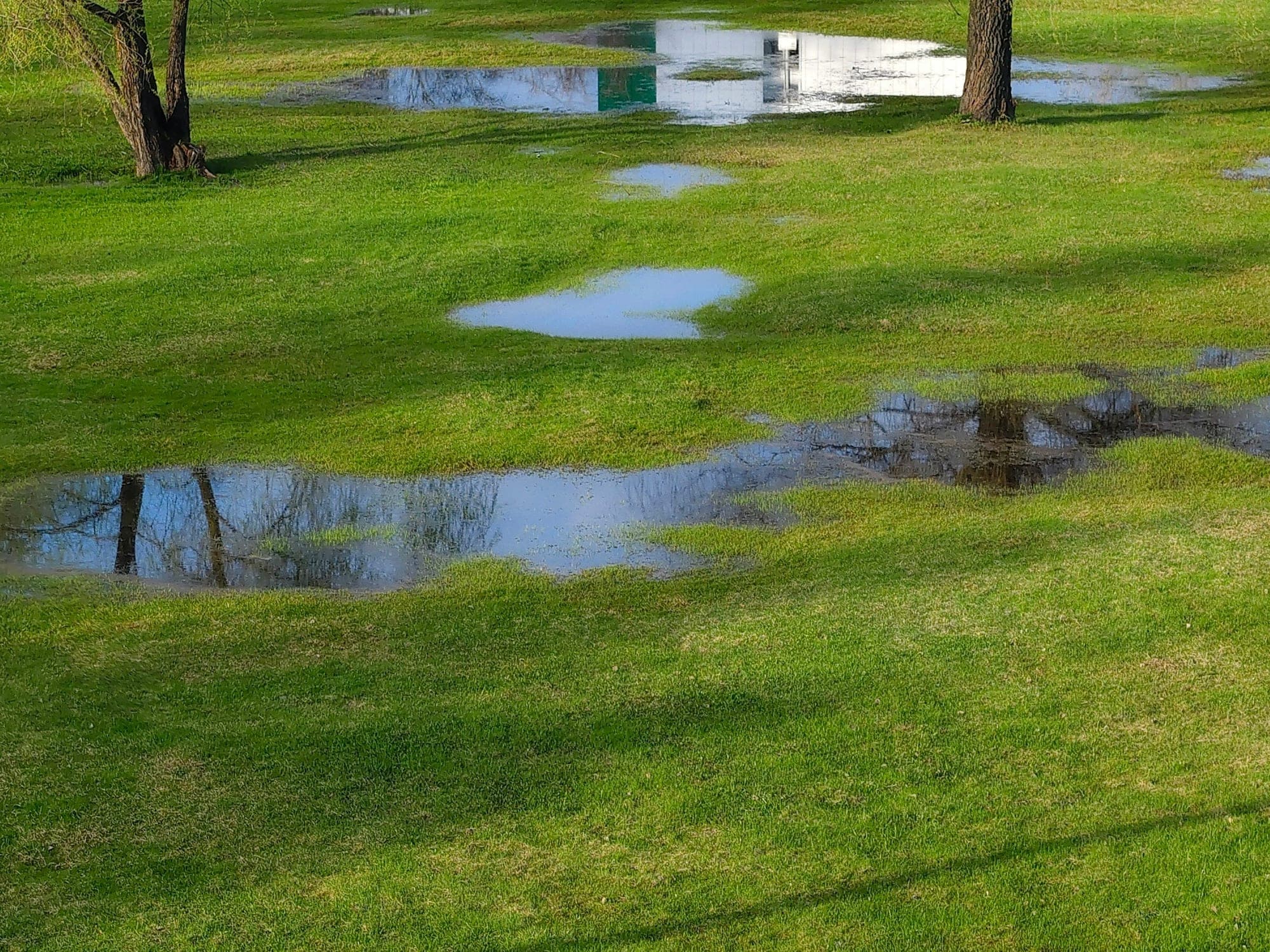
The RHS adds three cautions worth taking seriously: pressure washing uses a lot of water and energy for a result that does not last, because growth returns if the damp and shade that caused it are still there; the extra water can make damp worse where drainage is poor; and you should wear eye protection.
Should you use bleach or a patio cleaner?
Often not, and the sources do not agree. Marshalls suggests a half-and-half bleach and water mix for heavier moss and algae on Indian sandstone, rinsed off thoroughly. Elsewhere it says to use bleach sparingly and keep it off plants and soil. Mandarin Stone says vinegar and bleach can strip sealants and damage porcelain and natural stone over time. The RHS says chemical patio cleaners are not needed because non-chemical methods work, and notes that most are short-lived, so repeat applications are needed.
A sensible order is to scrub first, test any product in a hidden corner and follow your paving maker's instructions. Marshalls advises keeping cleaner away from plants, grass and wildlife, and it says acid-based products can cause rusting on some sandstone and lighten certain limestones.
Why does the green come back?
Algae and moss follow damp and shade, not dirt, so scrubbing alone only ever buys a few weeks. The RHS says they do not damage the surface but make it slippery, and that letting in light and air is what actually slows regrowth. To slow it:
- Prune overhanging plants so sun and wind can dry the surface.
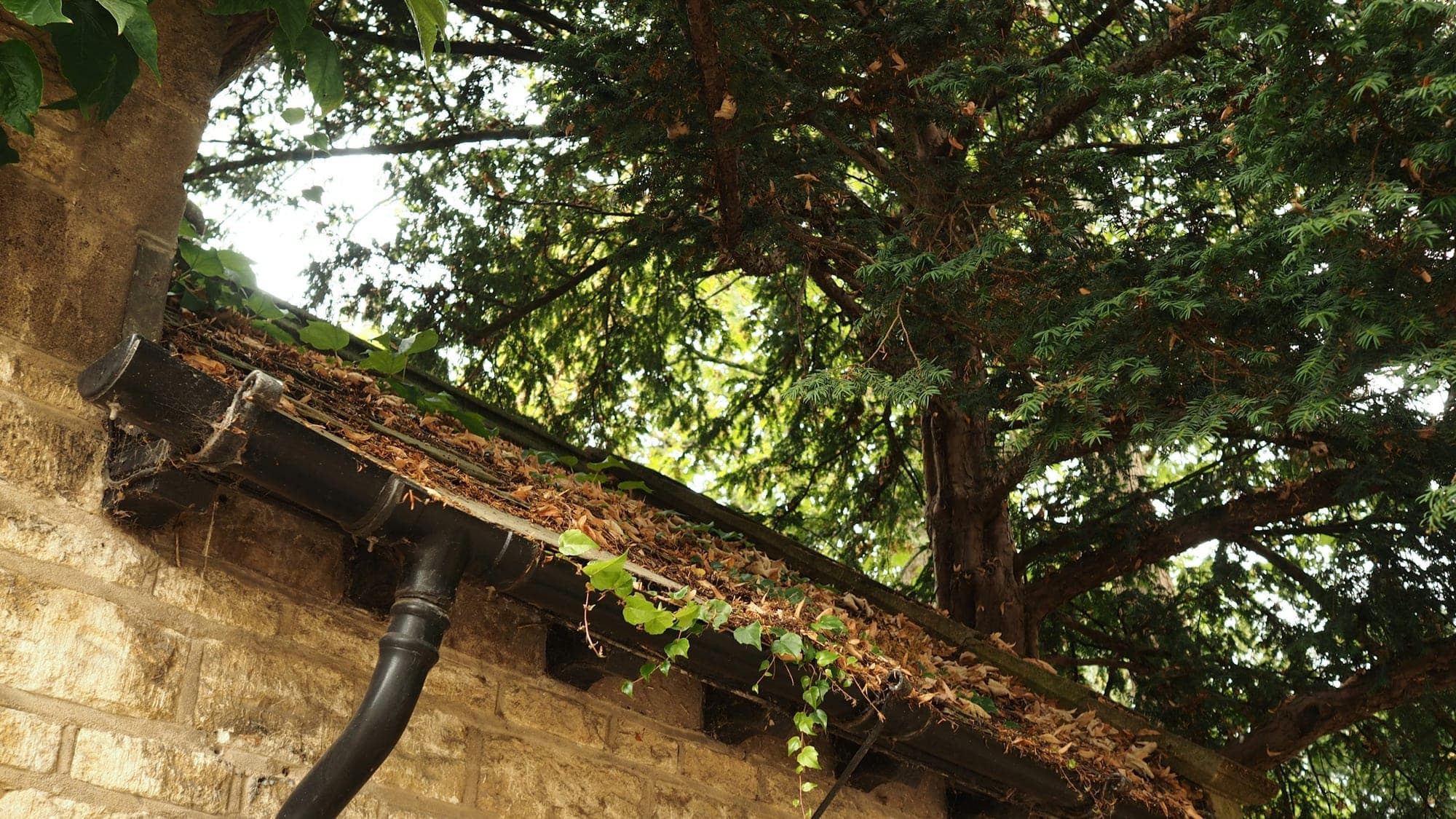
- Keep drains clear of leaves.
- Brush regularly, which the RHS says stops growth establishing.
- Check the slope. Surfaces that shed water stay cleaner, which is why the RHS suggests a slight fall and channels of coarse gravel along edges.
Weeds in the joints are a separate problem, covered in how to stop weeds growing between paving.
When is it worth getting someone in?
Consider it for a large area, a fragile stone or a surface you cannot reach safely. Too much pressure can mark a surface or break up the sand in the joints, and that damage costs far more to put right than the clean itself. Our jet wash and gutter clearing service starts with a free, no-obligation visit and a written quote.
Sources
- RHS: Algae and moss on hard surfaces
- Marshalls: How to clean your patio slabs
- Marshalls: Indian sandstone, busting the myths
- Marshalls: How to clean block paving driveways
- Marshalls: Garden paving technical information
- Mandarin Stone: Patio care guide
- Thames Water: Temporary hosepipe ban
This article sets out Aspen Rose's own reading of the manufacturer and RHS guidance above, useful background on cleaning paving safely, not professional advice for your particular stone or patio. Every surface is different, so if in doubt, get a free, no-obligation quote and we'll take a proper look.
Patio cleaning questions
How often should a patio be cleaned?
Marshalls suggests sweeping regularly, a thorough clean in spring after winter and sweeping leaves in autumn to prevent staining. It says a sealed patio may need only an annual clean. Shaded or poorly drained patios may need more attention.
Do I need to seal a patio?
It depends on the stone. Mandarin Stone says porcelain does not need sealing because it is so low in porosity. Darker rustic sandstone and slate can often be left unsealed, while lighter limestone stains more visibly and benefits more. If water soaks in and does not bead on the surface, a sealed patio needs resealing.
Is moss on a patio harmful?
The RHS says algae and moss do not damage the surface they grow on. The risk is slipperiness on paths, patios and steps, so it recommends managing growth where people walk. Where it is harmless, such as on a stone feature, you can leave it.
Related services
More from the blog
All articles →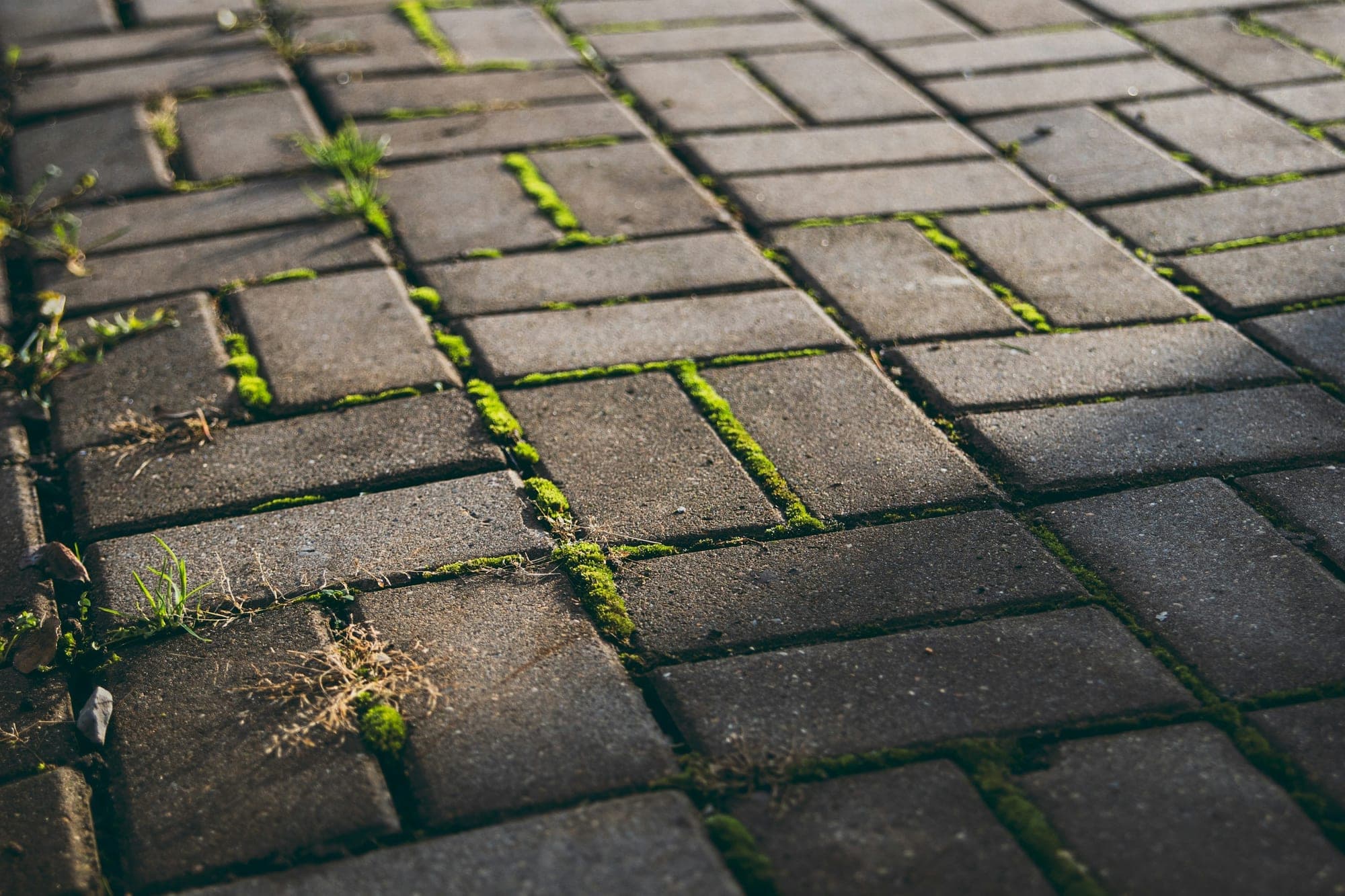
Want a hand with your garden?
Tell us what you have in mind and we'll arrange a free, no-obligation visit and quote.
Free, no-obligation visit · Mon – Fri: 9:00 – 18:30